A Glimpse into Morocco: What Moroccan Breakfast Looks Like
Imagine starting your day with a meal that is a feast for the senses. The morning meal in Morocco is far more than simple sustenance. It is a vibrant, social occasion that sets the tone for the entire day.
This cuisine represents a beautiful blend of Arabic, Berber, African, and European influences. Centuries of trade and cultural exchange have shaped these morning traditions. The result is a unique and flavorful experience.
At its heart, this first meal is a cherished ritual. Families gather to connect before the daily hustle begins. It’s a moment of calm and community.
You will discover the essential components that define this experience. Think fresh-baked breads, sweet spreads, and savory accompaniments. Aromatic mint tea is almost always present.
This guide will walk you through classic dishes and regional variations. You will learn about the cultural customs surrounding this important meal. We’ll even share some inspiring Moroccan breakfast ideas you can try at home.
Understanding this morning feast offers a window into the heart of Moroccan hospitality. Food truly becomes a language of love and welcome. Whether you’re planning a trip or exploring from your kitchen, get ready for a delicious journey.
Discovering the Charm of Moroccan Breakfast Culture
Centuries of cultural exchange have woven a rich tapestry into Morocco’s morning meal traditions. This first meal of the day reflects a beautiful blend of influences from across the Mediterranean and beyond.
Historical Influences and Traditions
French colonial rule left a lasting mark on the morning table. Croissants and pain au chocolat now sit alongside authentic local dishes. Yet traditional preparations remain the foundation.
Bread holds sacred importance in this culture. It symbolizes sustenance and shared abundance. Historically, families used communal ovens where neighbors baked together.
| Aspect | Traditional Practice | Modern Adaptation |
|---|---|---|
| Bread Preparation | Communal neighborhood ovens | Home baking & local bakeries |
| French Influence | Limited colonial period items | Integrated pastries & breads |
| Social Connection | Oven as gathering point | Family meal time bonding |
The Social and Communal Experience
The morning meal is a slow, intentional gathering. Families connect and share stories before the day begins. Unlike rushed Western mornings, this time is cherished.
Hospitality extends to breakfast time. Guests are warmly welcomed to join. Turning away a visitor would be considered inappropriate.
Each family’s spread differs based on region and preference. Yet freshness and tradition remain constant. Discover more about this beautiful moroccan breakfast table experience.
Understanding What Moroccan Breakfast Looks Like
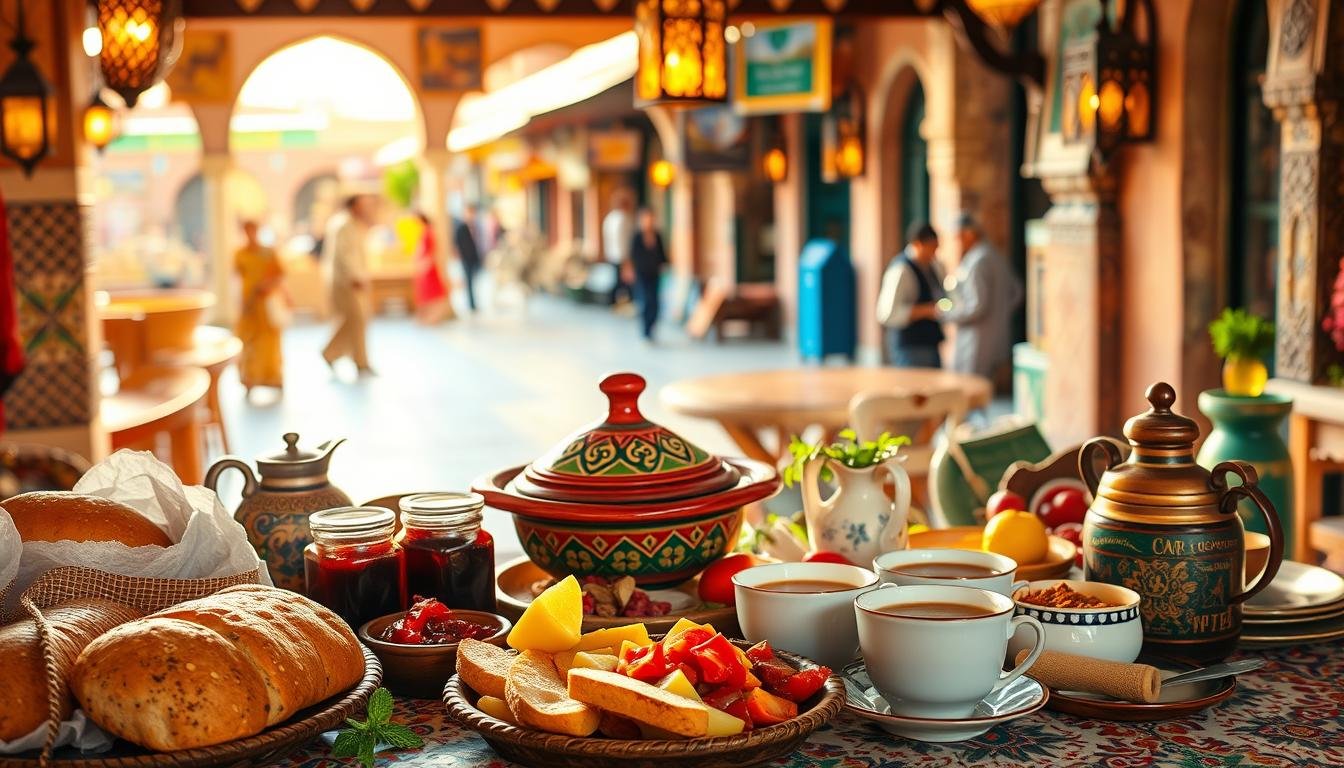
Picture a table laden with warm, golden breads, vibrant spreads, and steaming beverages. This is the typical morning scene in many homes. The spread is a feast for the eyes and the soul.
Freshly baked breads form the foundation. They are accompanied by an array of dips, savory cheeses, and sweet jams. Aromatic mint tea or fresh orange juice completes the setting.
The balance is key. Creamy dairy, natural sugars, and earthy oils create a harmonious meal. Each component complements the others perfectly.
Everything emphasizes freshness. Bread is baked at dawn, juice is squeezed to order. This commitment to quality is central to the experience.
The presentation is a colorful mosaic. Green olives, white cheese, and amber honey create an inviting display. It’s a visual celebration of the moroccan breakfast tradition.
Unlike structured Western meals, this is served family-style. All dishes are shared, encouraging conversation and connection. It’s a nourishing start that fuels the day ahead.
Iconic Moroccan Breads and Pancakes
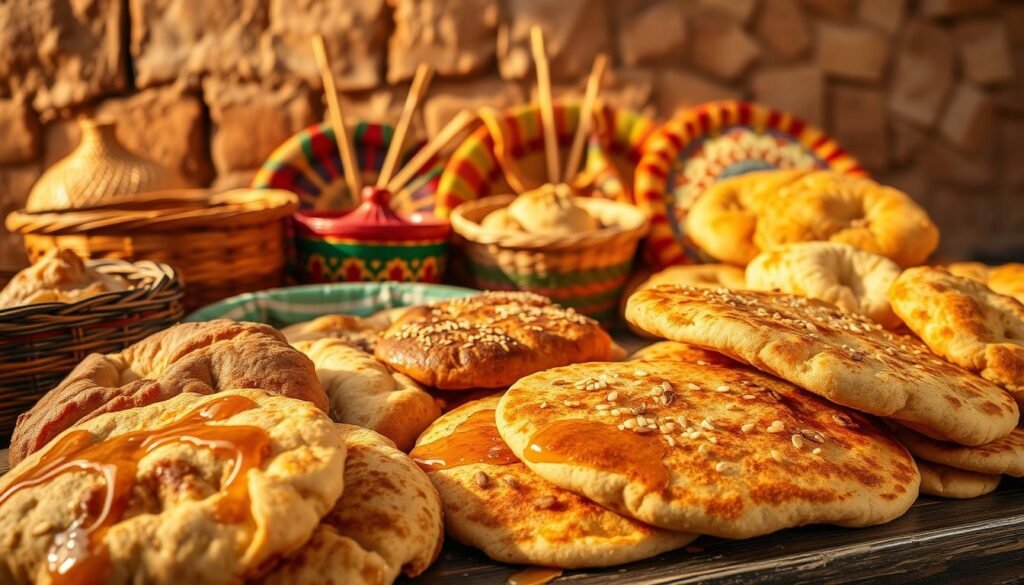
The morning table is built upon a foundation of freshly baked breads. No meal is complete without at least one variety. These staples are essential for scooping, dipping, and savoring every flavor.
Khobz: The Ubiquitous Bread
Khobz is the everyday round loaf found everywhere. Its golden crust is perfect for scooping up food. The soft interior is ideal for soaking up olive oil or egg yolk.
This versatile bread often replaces cutlery. You will find it in every bakery and home kitchen. It is a true cornerstone of the daily meal.
Baghrir & Msemen: The Pancake Duo
Baghrir are unique semolina pancakes. They are cooked only on one side, creating dozens of tiny holes. These craters perfectly trap melted butter and sweet honey.
Msemen is a flaky, square-shaped flatbread. The dough is stretched thin, folded, and pan-fried. It has crispy edges and a soft, chewy center.
Both are beloved for their texture. They are commonly enjoyed with jam or soft cheese. They turn a simple meal into a special treat.
| Bread Type | Key Characteristic | Common Toppings |
|---|---|---|
| Khobz | Round, crusty loaf, soft interior | Olive oil, honey, dips |
| Baghrir | Spongy, “thousand-hole” pancake | Butter, honey, jam |
| Msemen | Layered, flaky flatbread | Honey butter, cheese, jam |
Other quick options like Harcha and Batbout add variety. You can explore a classic Moroccan breakfast to see how these elements come together beautifully.
The Art of Moroccan Mint Tea and Juices
No morning gathering is complete without its signature beverages. These drinks are more than just refreshments. They are essential elements of the entire experience.
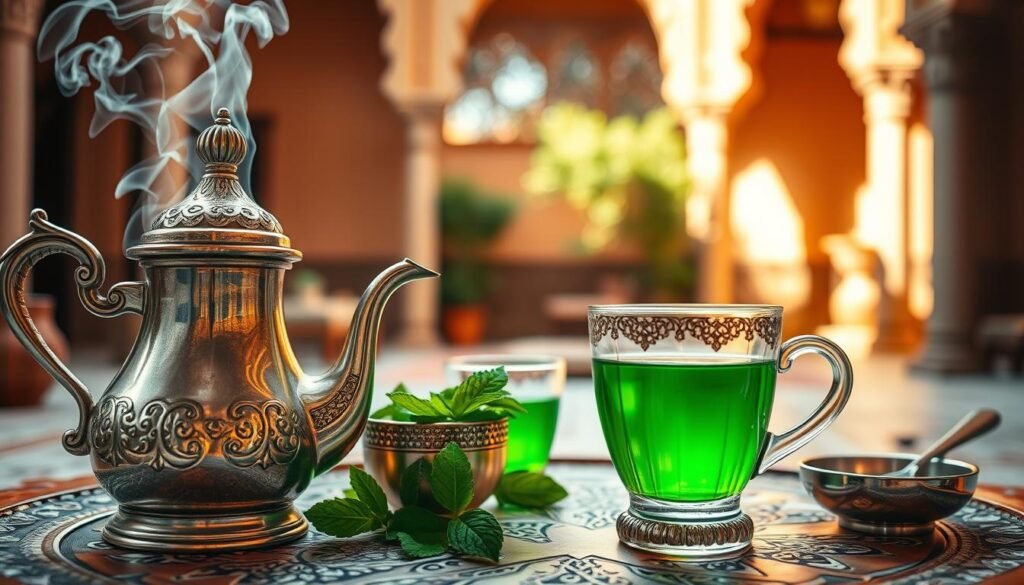
The undisputed star is a sweet, aromatic mint tea. It represents deep hospitality and tradition. This beverage sets a welcoming tone for your meal.
Brewing the Perfect Mint Tea
Creating authentic tea is a skillful process. It starts with Chinese gunpowder green tea as the base. Generous handfuls of fresh mint leaves are added.
Unlike simple infusions, the leaves and mint boil together for several minutes. This concentrates the flavors beautifully. A substantial amount of sugar is used to achieve the signature sweet taste.
The serving ritual is a spectacle. Tea is poured from a height into small glasses. This aerates the drink and creates a light foam.
Servings come in multiple rounds during the meal. This extends the social time. For special occasions, aromatics like orange blossom water are included.
Fresh Orange Juice: A Citrus Burst
The second essential drink is freshly squeezed orange juice. Morocco’s climate produces wonderfully sweet, juicy oranges. The juice is always made to order.
It is often sweetened to match local preferences. The bright, acidic flavor perfectly balances rich, oily foods. It acts as a refreshing palate cleanser between bites.
| Beverage | Key Ingredient | Serving Style |
|---|---|---|
| Mint Tea | Gunpowder Green Tea | Hot, in small glasses |
| Fresh Orange Juice | Local Oranges | Chilled, in glasses |
Savory Complements: Cheeses, Spreads, and Dips
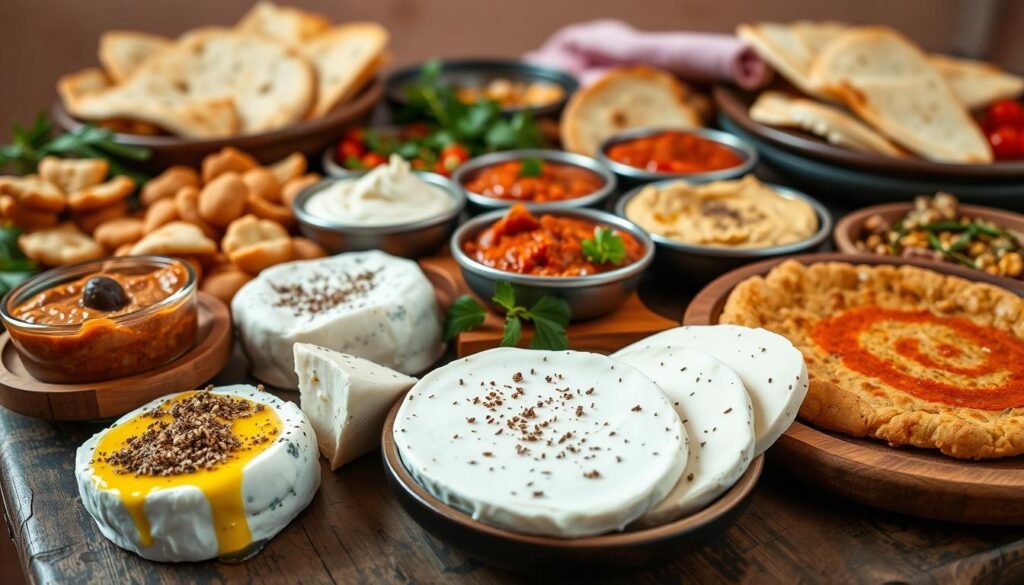
Beyond the breads and beverages lies a world of flavorful spreads and cheeses that define the experience. These savory additions transform simple morning fare into a complete, satisfying meal.
Amlou and Olive Oil Delights
Amlou stands out as a signature spread. This rich paste combines roasted almonds with precious argan oil and honey. Argan oil production is incredibly labor-intensive, making it a prized ingredient.
The texture can range from smooth to chunky. Color varies from light tan to deep brown depending on almond preparation. It’s a protein-rich way to start your day.
Many families take pride in their extra virgin olive oil. Some even press their own using traditional methods. Dipping fresh bread into quality olive oil is a cherished ritual.
Goat Cheese and Olives on the Side
Jben is the traditional fresh cheese you’ll often find. It has a light, tangy flavor and soft texture. Many households make it fresh the night before using milk and lemon juice.
Olives provide a salty, briny contrast to sweeter items. Both black and green varieties are common. They’re typically served on the side for optional pairing.
Honey and jam offer sweet counterpoints. The honey-butter mixture is particularly luxurious on warm breads. These elements create a balanced, flavorful morning feast.
Regional Twists in Moroccan Breakfast Traditions
From the Mediterranean coast to the Sahara Desert, the first meal of the day adapts beautifully to its surroundings. While bread and tea are constants, local ingredients and customs create a fascinating tapestry of flavors.
Northern, Atlas, and Southern Variations
In the north, a Mediterranean touch is evident. Families use abundant olive oil and wild herbs. Fresh jben cheese from the Rif Mountains is a highlight.
Bissara, a hearty fava bean soup, warms up cold mornings. Interestingly, tea is often served after the meal here.
Atlas Mountain communities need hearty fuel. Their morning table includes extra amlou, honey, and preserved meats. Thicker breads stay fresh longer at high altitudes.
In the southern desert, dates become essential morning staples. The intense heat influences timing. Families rely on preserved foods and dried fruits.
Local Ingredients and Unique Flavors
Coastal cities like Casablanca and Rabat show a clear French influence. Croissants appear alongside traditional breads. Coffee competes with mint tea for the preferred morning beverage.
Timing varies greatly. Rural areas eat early with the sun. Tourist spots may not serve until 9:00 AM.
| Region | Key Ingredients | Unique Dish | Beverage Note |
|---|---|---|---|
| Northern (Mediterranean) | Olive oil, wild herbs, jben | Bissara soup | Tea after the meal |
| Atlas Mountains | Amlou, honey, preserved meats | Dense, long-lasting breads | Tea during meal |
| Southern Desert | Dates, preserved foods | Dried fruit plates | Essential hydration |
| Coastal Cities | Croissants, khobz | Blended pastries | Coffee or tea |
Despite these differences, the communal spirit remains the strong, unifying thread. Every regional variation celebrates freshness and togetherness.
Embracing the Moroccan Morning Experience
Transforming your morning routine begins with embracing the spirit of Moroccan hospitality right in your own kitchen. You can start small with just mint tea and one type of bread, then gradually expand your spread.
Begin with accessible recipes like baghrir pancakes or semolina coconut cake. Most ingredients like flour, eggs, and honey are easy to find. For authenticity, add specialty items like argan oil or orange blossom water.
Arrange multiple small dishes in the center of your table for sharing. Serve tea in small glasses and take your time. The goal isn’t perfection but connection.
This morning meal offers more than culinary delight. It brings centuries of tradition to your home, turning breakfast into a meaningful ritual of togetherness.