First-Timer’s Guide: how to plan a trip to morocco for the first time
Did you know Morocco receives over 11 million visitors annually? This North African nation has become a top destination for a reason. It offers an incredible blend of culture, adventure, and unforgettable sights.
Situated just a short journey from Europe, Morocco feels like a world away. It serves as a captivating bridge between Africa, the Arab world, and Europe. You can explore ancient imperial cities, trek through the Atlas Mountains, and sleep under the stars in the Sahara Desert.
While the sheer diversity is exciting, it can also feel overwhelming. Major destinations like Marrakech and Fes are hours apart. That’s where solid preparation becomes your best travel companion.
This comprehensive guide is designed to simplify your entire journey. We will walk you through every essential step. You will learn about visa requirements, budgeting, and cultural etiquette.
With the right approach, your adventure will be smooth and incredibly rewarding. Millions of travelers have fallen in love with this country’s vibrant energy. Get ready to discover why.
Understanding Morocco: The Land and Its Allure
Stepping into Morocco feels like entering a living museum where ancient traditions meet breathtaking natural wonders. This North African country offers an incredible blend of cultural richness and geographical diversity.
Cultural and Historical Overview
Morocco’s cultural tapestry weaves together Berber, Arab, African, and European influences. Imperial cities like Marrakesh and Fez showcase this heritage beautifully. They serve as living monuments to dynasties that shaped the country over millennia.
The warm hospitality of Moroccan people, especially Berber communities in mountain regions, enhances any visit. Their traditions remain vibrant and welcoming. This cultural depth makes every experience here uniquely memorable.
Diverse Landscapes from City to Desert
Geographical variety defines this fascinating country. You can explore Mediterranean coastlines, rugged atlas mountains, and vast Sahara dunes. Each region offers distinct adventures and scenery.
The cities themselves present striking contrasts. Ancient medinas with bustling souks exist alongside modern urban centers. This diversity means careful planning a trip to Morocco helps you experience the full range.
From snow-capped peaks to desert oases, the landscape constantly surprises. The country contains worlds within borders. Understanding this variety is key to appreciating all Morocco offers.
Planning Your Trip: how to plan a trip to morocco for the first time
The key to a successful Moroccan journey lies in establishing clear priorities before mapping out your route. This thoughtful approach ensures your limited time aligns with what matters most to you personally.
Setting Priorities and Goals
Begin by asking yourself what type of traveler you are. Do you seek cultural immersion, adventure activities, or culinary experiences? Maybe you want a combination of these elements.
Your available time significantly impacts your itinerary. With major destinations spread across the country, a 7-10 day trip typically covers 2-3 cities comfortably. For a more comprehensive experience, consider 2-3 weeks.
Create a list of must-see destinations first. Then group geographically logical combinations. This strategic planning prevents excessive travel time between locations.
Consider your preferred pace too. Some visitors enjoy deeper immersion in fewer places. Others prefer moving frequently to sample more destinations.
Balance structured activities with free time for spontaneous exploration. Clear priorities help make difficult decisions when time is limited, ensuring your Moroccan adventure reflects your personal interests.
Best Time to Visit Morocco
Choosing when to explore Morocco is just as important as deciding where to go on your journey. The country’s diverse geography creates distinct seasonal experiences that can transform your adventure.
Weather Considerations and Seasonal Tips
Spring (mid-March to June) offers ideal conditions for your visit morocco experience. Temperatures are comfortable, and landscapes bloom with vibrant colors. This time visit provides perfect weather for exploring cities and countryside alike.
Summer brings intense heat to inland areas but coastal regions remain pleasant. The desert can be extremely hot, while beaches in Agadir offer refreshing escapes. Early morning hikes in the Atlas Mountains work well during this season.
| Season | Weather Conditions | Crowd Levels | Best Activities |
|---|---|---|---|
| Spring (Mar-Jun) | Mild, 60-80°F | Moderate | City exploration, hiking |
| Summer (Jul-Sep) | Hot inland, coastal breezes | Peak tourist season | Beach trips, early hikes |
| Autumn (Sep-Oct) | Pleasant, 65-85°F | Moderate | Desert tours, medina walks |
| Winter (Dec-Feb) | Mild cities, cool mountains | Low except holidays | Sahara trips, urban exploring |
Avoiding Peak Crowds
The ideal time to visit morocco for smaller crowds is during shoulder seasons. Spring and early autumn see fewer tourists than peak summer months. You’ll find better accommodation rates and more authentic experiences.
July through September attracts the largest numbers of visitors. Booking accommodations early becomes essential during this busy time. Consider coastal areas if you must travel in summer, as they handle crowds better than inland cities.
Your trip morocco timing should align with your preferred experience. Each season offers unique advantages for different types of travelers.
Visa, Passport, and Health Requirements
Proper preparation regarding visas and health precautions ensures your journey begins without complications. Many countries enjoy simplified entry procedures when visiting Morocco. Understanding these requirements saves valuable time.
Visa-Free Entry for U.S. Travelers
Citizens from the United States, Canada, Australia, UK, and EU countries can enter Morocco without a visa. This applies to stays under 90 days. Your passport must be valid for at least six months beyond your departure date.
Ensure you have one blank page available for entry stamps. Always verify current requirements before you travel. Policies can change with little notice.
| Document | Requirement | Notes |
|---|---|---|
| Passport | 6 months validity | Beyond departure date |
| Visa | Not required | For stays under 90 days |
| Blank Pages | At least one | For entry/exit stamps |
Travel Health and Safety Essentials
Morocco has lifted all COVID-19 travel restrictions. No mandatory vaccinations are required at this time. Consult a travel health clinic for personalized advice.
Traveler’s stomach issues can occur. Pack medications for food poisoning or digestive problems. Avoid street food initially until your system adjusts.
Drink bottled water and be cautious with ice in drinks. Consider comprehensive travel insurance with medical coverage. Healthcare standards vary across the country.
Register with your embassy if staying for an extended period. Keep emergency contact information accessible. This preparation provides peace of mind.
Crafting an Itinerary Across Moroccan Cities
Building your route is an exciting step. Your choices shape the entire adventure.
Focus on geographic logic. Grouping nearby destinations saves precious time. This approach makes your journey smoother.
Selecting Must-Visit Destinations
Marrakech is an excellent starting point. It’s often the most affordable city for flights. Its central location makes travel connections easier.
Spend at least two full days here. This allows you to experience the vibrant medina. You’ll appreciate the city’s famous energy.
Consider other incredible cities for your list. Fes offers an ancient, maze-like medina. Chefchaouen is famous for its blue-washed streets.
Coastal Essaouira provides a relaxing contrast. Casablanca showcases modern Moroccan life. Each place offers a unique perspective.
Be realistic about your available time. A one-week journey comfortably fits 2-3 cities. A two-week trip allows for 4-5 destinations.
Always account for travel between locations. A journey from Marrakech to Fes takes about six hours by car. These transit times add up quickly.
Cluster cities by region for efficiency. A southern route could include Marrakech, Essaouira, and Ouarzazate. A northern circuit might feature Fes, Chefchaouen, and Tangier.
Resist the urge to overcrowd your schedule. Rushing between cities leads to exhaustion. Allow yourself to truly absorb each location.
Transportation Options in Morocco
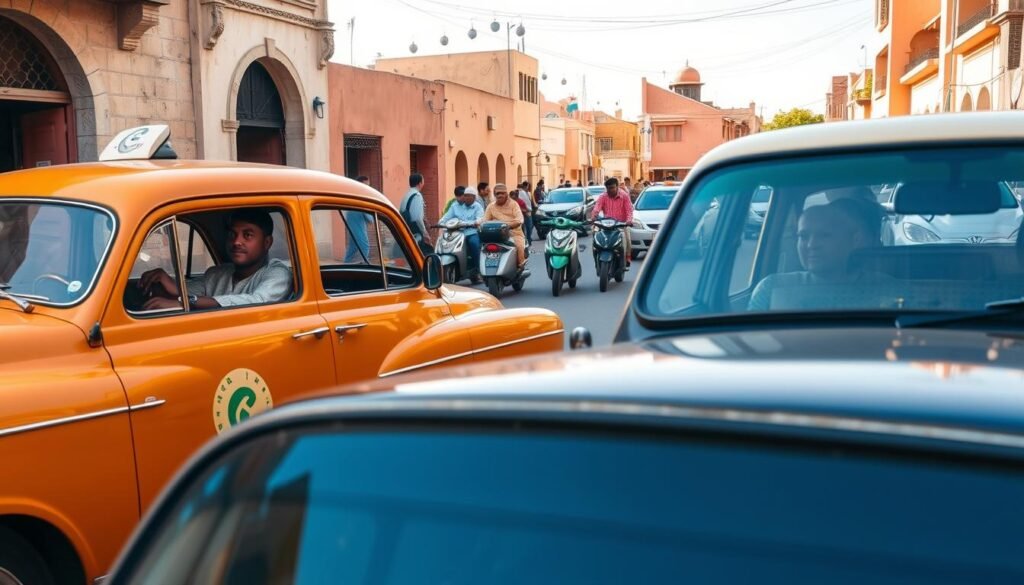
Getting around this beautiful country is an adventure in itself. You have many excellent choices to match your travel style.
Your journey can be comfortable and affordable. The key is picking the right options for each part of your route.
Trains, Buses, and Taxis
Morocco’s rail network is a top choice for comfort. It connects major northern cities reliably. This is the best way to travel between hubs like Marrakech and Casablanca.
Buses are the most economical options. They serve almost every town. Be prepared for longer travel times.
You will encounter two types of taxis. Petit taxis operate within cities. They are small and carry up to three passengers. Always agree on a fare before you start your ride.
Grand taxis are larger vehicles for intercity travel. They fit up to six people. Apps like Careem work in major cities for booking taxis.
Hiring Private Drivers vs. Self-Driving
Hiring a private driver offers great convenience. It is perfect for day trips or complex routes. A driver knows the roads and can share local insights.
Renting a car gives you maximum freedom. You set your own schedule. International rental companies are widely available.
Main roads are generally in good condition. Rural paths can be narrow. Driving in cities requires extra caution.
Consider this comparison for your decision:
| Option | Best For | Approx. Daily Cost |
|---|---|---|
| Private Driver | Stress-free exploration | From $116 USD |
| Rental Car | Total independence | 300-900 MAD |
Your choice depends on comfort and budget. A private driver handles navigation. Renting a car puts you in control.
Budgeting for Your Moroccan Adventure
A clear budget is your passport to a stress-free journey. It turns financial worries into confident decisions.
Smart financial planning lets you focus on the experience, not the expense. You can enjoy your trip without constantly checking your wallet.
Estimating Daily Expenses
Daily costs for essentials are surprisingly low. Expect to spend around $55 USD per day. This covers meals, local transport, coffee, and attraction tickets.
Your food budget has a lot of flexibility. You can find delicious, filling meals for under $8. A nicer restaurant meal might cost around $20.
This table breaks down potential daily spending:
| Expense Category | Budget-Friendly | Moderate |
|---|---|---|
| Meals | $15 – $25 | $30 – $50 |
| Local Transport | $5 – $10 | $15 – $25 |
| Attractions | $10 – $20 | $20 – $40 |
Cost-Saving Tips for Flights and Accommodations
Booking flights 2-6 months ahead often yields the best deals. Flights from U.S. East Coast cities are generally cheaper. Consider connecting through European hubs for better fares.
For accommodation, look beyond big hotels. Many beautiful riads are available for under $100 per night on sites like Airbnb. Staying in a medina can reduce taxi costs.
Your travel budget should include a separate amount for shopping. High-quality crafts like rugs and ceramics are tempting. Allocating funds beforehand prevents overspending.
Where to Stay: Immersive Moroccan Riads and Hotels
Your choice of accommodation becomes a core part of your adventure. It’s more than just a place to sleep; it’s an immersive cultural experience.
Riads are quintessential Moroccan guesthouses. They are traditional homes built around beautiful interior courtyards. Staying in one offers an intimate, boutique-style accommodation.
These properties are often restored mansions or palaces. They feature ornate tilework and carved wood details. Many have rooftop terraces and small pools.
You can find excellent riads on sites like Mr. and Mrs. Smith. Airbnb also lists many options, often under $100 per night. Always read recent reviews before booking.
In Marrakech, El Fenn is a top choice for design lovers. For a mountain stay, Auberge Chez Pierre in Dades Valley offers luxury at great value. Jnane Tamsna is a wonderful, Black-owned place just outside the Medina.
Riads within medinas provide authentic atmosphere and walkability. They can be tricky to find at first, but that’s part of their charm. Your group will enjoy the personalized service.
While riads are a highlight, Morocco offers all accommodation types. You can find everything from luxury resorts to budget guesthouses. The right place depends on your preferences.
Communicate any specific needs with your host. This includes requests for ground-floor rooms or dietary requirements. A little preparation ensures your accommodation feels like a home away from home.
Savoring Moroccan Cuisine and Dining Experiences
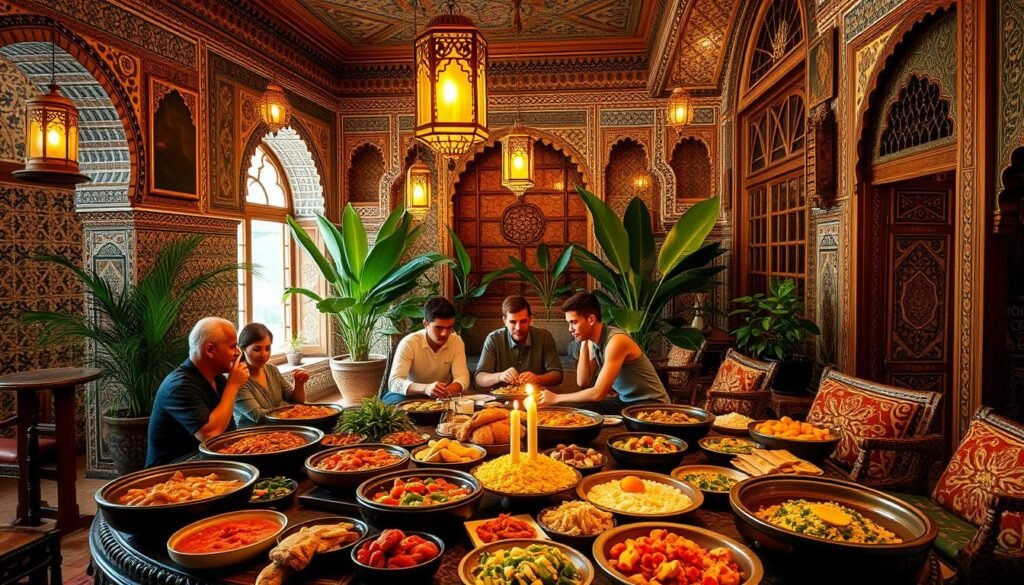
Exploring the culinary landscape offers some of the most memorable moments of any visit. Moroccan food is one of the world’s great culinary traditions. It features aromatic spices, slow-cooked tagines, and perfect sweet-savory balance.
Local Dishes You Must Try
Start with couscous, the national dish. Authentic Moroccan couscous is hand-rolled and traditionally served on Fridays. Tagine refers to both the clay pot and the dish cooked inside it.
These slow-cooked meals feature tender meats, vegetables, and spices. Don’t miss harira soup, a rich blend of tomatoes and lentils. Pastilla offers a unique sweet-savory meat pie experience.
For lighter fare, try zalouk eggplant spread with crusty bread. Msemen flatbreads make excellent street food snacks. Mint tea is served throughout the day as a warm hospitality gesture.
| Dish | Description | Best Time to Try |
|---|---|---|
| Couscous | National dish with meat/vegetable stew | Friday lunches |
| Tagine | Slow-cooked in clay pot | Dinner |
| Pastilla | Sweet-savory meat pie | Special occasions |
| Msemen | Flatbread street food | Breakfast or snack |
Exploring Food Markets and Street Eats
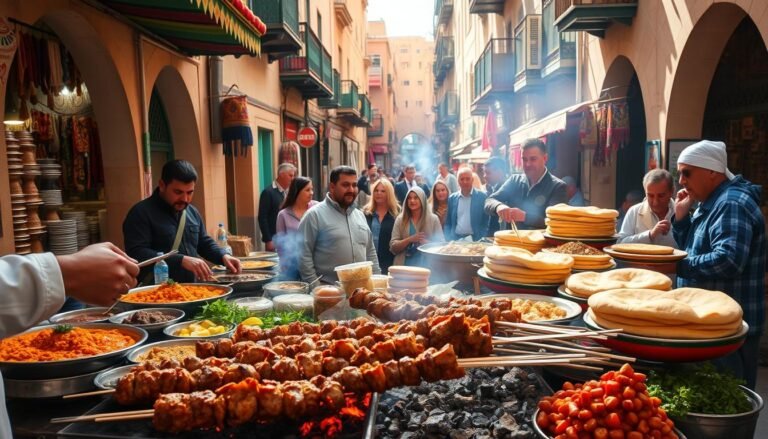
Food markets provide exciting sensory experiences. They’re photogenic but require some caution. Start with established restaurants before diving into street food.
This lets your system adjust to new ingredients. Consider a cooking class to learn spice blends and techniques. Moroccan meals often feature multiple small plates.
Fresh bread accompanies everything, with fruit for dessert. The local food truly brings the culture to life.
Navigating the Markets and Souks
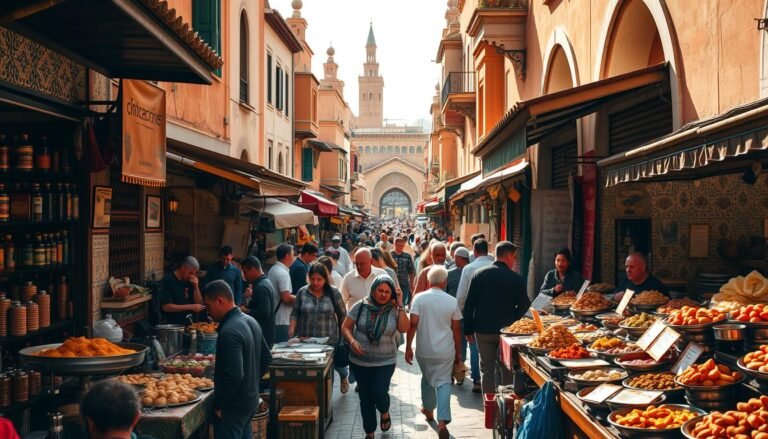
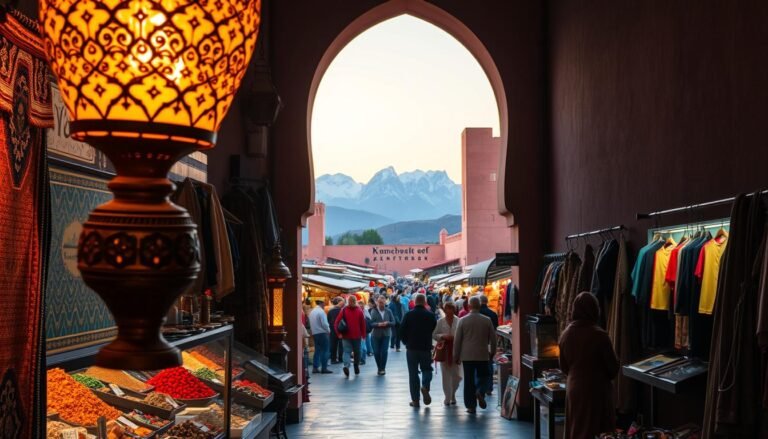
Morocco’s traditional markets present a sensory feast that requires some strategic preparation. The winding alleys of medinas like Fes can be overwhelming at first. You’ll find thousands of shops selling everything from spices to handcrafted goods.
This vibrant shopping environment offers an authentic cultural experience. The colors, aromas, and artisan workshops create a memorable atmosphere. However, the labyrinthine layout means it’s easy to get lost.
Bargaining Techniques
Haggling is expected in Moroccan markets. Initial prices are often two to three times higher than the final cost. Starting at 40-50% of the asking price is a good way to begin negotiations.
Maintain a friendly but firm demeanor during your shopping. Be willing to walk away if the price doesn’t feel right. This approach often leads to better deals.
You’ll find a lot of beautiful items like leather goods from the Chouara Tanneries. Compare prices across multiple vendors before making purchases. Guides may steer you to specific shops for commissions, so be clear about your shopping intentions.
Keep valuables secure in crowded areas. Plan your market visits for days other than Friday, when many shops close for the holy day. Hiring a guide can help navigate the maze-like streets if you’re uncomfortable exploring alone.
Safety Tips and Cultural Etiquette
Your safety and comfort in Morocco depend greatly on understanding and respecting local customs. Most visitors have positive experiences when they follow basic guidelines.
For women travelers, modest dress is recommended. Cover shoulders and knees when outside hotel areas. Lightweight pants and longer dresses work well. Many women travel safely, but experiences vary.
Keep this advice in mind: avoid walking alone in medinas at night. Travel with companions when possible. Trust your instincts if situations feel uncomfortable.
Local people appreciate respectful behavior. Always ask permission before taking photos. Some may request small payment. A finger wag means “no photos.”
| Common Scams | How to Respond | Prevention Tips |
|---|---|---|
| Unsolicited guides | Politely decline | Research routes beforehand |
| “Free” henna applications | Walk away firmly | Use reputable shops |
| Aggressive vendors | Stay calm, move on | Shop with confidence |
In religious sites, dress conservatively and remove shoes. Use your right hand for eating and greetings. Accept mint tea when offered—it’s a hospitality gesture.
Tourist areas like Marrakech are more relaxed, but respecting customs improves interactions. Keep valuables secure and avoid displaying expensive items.
Cultural sensitivity goes a long way toward positive experiences with local people. Keep these tips in mind for a safe, rewarding journey.
Packing Essentials and Travel Gear
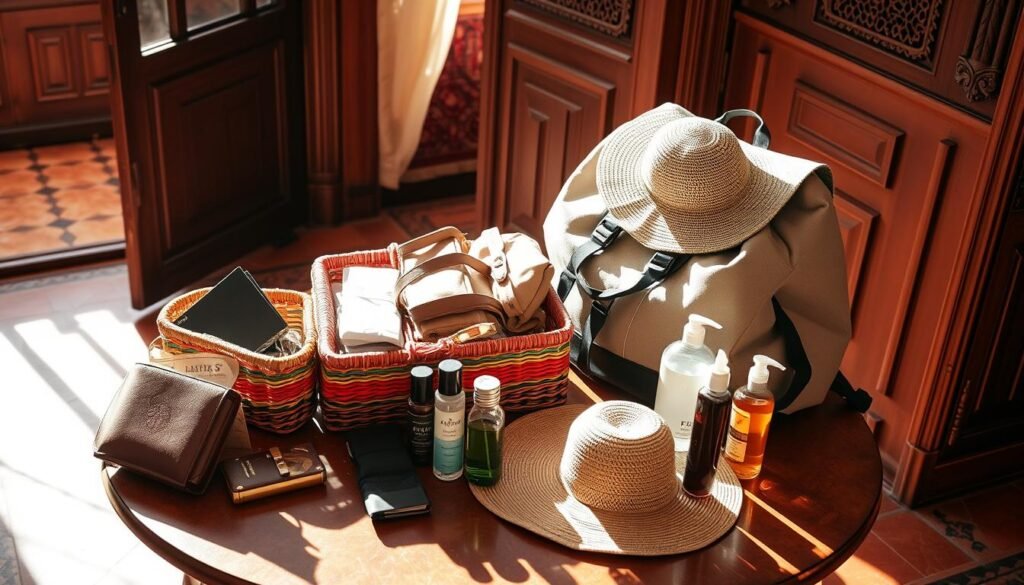
Smart packing makes all the difference when preparing for your Moroccan adventure. The right things in your suitcase ensure comfort and cultural respect throughout your journey.
For women, layers are essential. You’ll want modest coverage in many situations. Choose lightweight, breathable fabrics that handle the warm climate.
Pack comfortable linen pants and maxi dresses with flowy sleeves. Bring a versatile scarf for shoulder coverage at religious sites. This same scarf protects from sun in the desert.
Don’t forget a light jacket for cooler evenings. Temperature drops can surprise you in mountain and desert areas. Comfortable walking shoes are another must.
Technology preparation saves time and frustration. Download offline Google Maps before leaving home. International phone plans often don’t work here.
Google Translate is invaluable for navigating local markets. Bring portable chargers for long days of exploration. These things make your travel smoother.
Health items are crucial. Pack medications for stomach issues and food poisoning. Include sunscreen, hand sanitizer, and any prescription drugs.
Practical travel gear includes a daypack for excursions. Bring a reusable water bottle and Moroccan outlet adapter. A small bag for carrying shoes at mosques is helpful.
Leave expensive jewelry at home to avoid unwanted attention. Pack light initially to leave space for souvenirs. Moroccan shopping temptations are hard to resist!
Planning Around Religious Holidays and Local Festivals
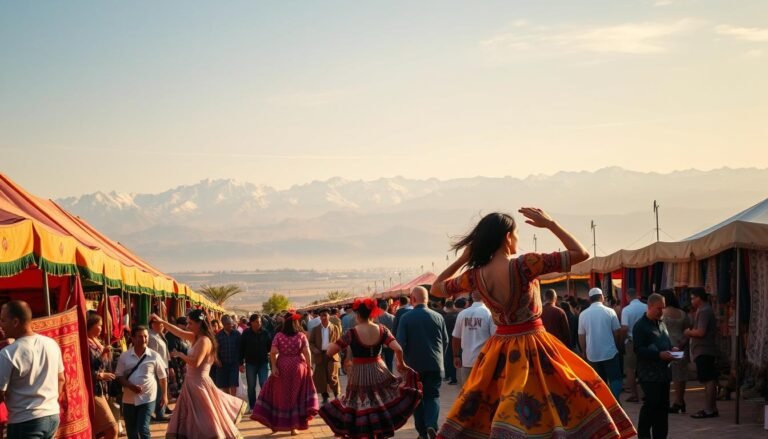
Your journey’s timing can be dramatically influenced by Morocco’s religious calendar. Islamic holidays affect business hours and site accessibility. Checking dates beforehand prevents surprises.
Ramadan is a month-long fasting period. Muslims abstain from food and drink from dawn until sunset. Most local restaurants close during daylight hours. This can limit your dining options significantly.
Non-Muslims aren’t expected to fast. However, avoid eating or drinking publicly during daylight hours out of respect. Evenings come alive with special celebrations and festive atmospheres. Fridays are holy days when many shops close.
| Holiday | Typical Timing | Impact on Travelers |
|---|---|---|
| Ramadan | March/April | Limited daytime dining, vibrant nights |
| Eid al-Fitr | End of Ramadan | Business closures, family gatherings |
| Eid al-Adha | July | Transportation delays, limited services |
Consider your priorities when selecting travel dates. Avoid Ramadan if dining experiences are central to your journey. Embrace it for unique cultural immersion. Book accommodations and tours well in advance during holiday periods.
Airport Transfers and Getting Around Locally
Your first moments in Morocco begin with choosing the right gateway airport. This decision impacts your entire itinerary and initial travel experience.
Choosing the Best Arrival Airport
Morocco has several international airports serving different regions. Mohammed V International Airport in Casablanca is the primary gateway with flights from New York, Montreal, and Dubai.
Marrakech Menara Airport offers excellent connections to European cities like London and Paris. Budget airlines like Easyjet and Ryanair serve this airport frequently.
| Airport | Best For | Key Destinations | Transfer Cost Range |
|---|---|---|---|
| Mohammed V (Casablanca) | Northern Morocco access | Fes, Rabat, Tangier | Up to 300 MAD |
| Marrakech Menara | Southern Morocco access | Atlas Mountains, Sahara | 70-100 MAD |
Local Transport Options from the Airport
Upon arrival, you have several transportation options. Official airport taxis operate with fixed rates displayed clearly.
Private transfers arranged through your accommodation provide convenience. They eliminate language barriers and potential scams.
Train service connects Mohammed V Airport to Casablanca city center efficiently. This is one of the most reliable options available.
Budget travelers can consider public buses from some airports. These are economical but less convenient with luggage.
Have Moroccan dirhams ready since cash is king. Exchange a small amount at the airport for immediate needs.
Notify your credit card company about your travel plans beforehand. This prevents cards from being blocked for suspected fraud.
Enhancing Your Trip with Local Experiences
The true magic of Morocco unfolds when you step away from the guidebooks and immerse yourself in local traditions and landscapes. These authentic encounters create lasting memories far beyond standard sightseeing.
Camel Rides and Desert Excursions
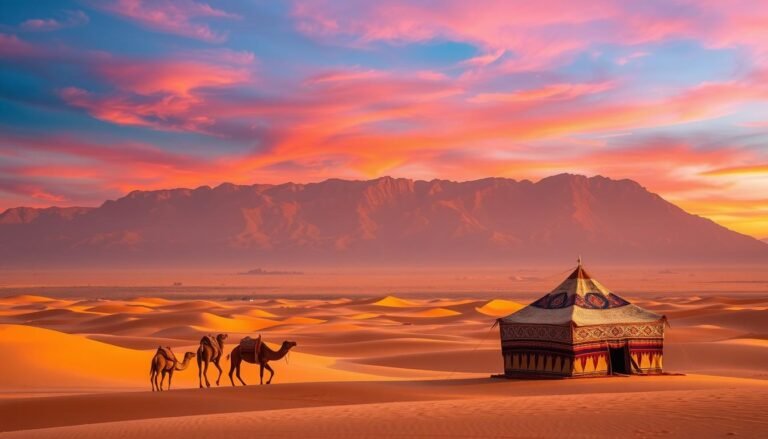
No experience compares to a Sahara desert adventure. In Merzouga, gateway to Erg Chebbi’s expansive dunes, camel treks at sunset offer breathtaking views. You can glide over golden sands as the sky transforms with vibrant colors.
Many tour packages include glamping under star-filled skies. Evenings feature traditional Berber music around campfires. The next morning, wake to spectacular sunrises and opportunities for photography in dramatic landscapes.
Temperatures in the desert often reach the 80s during the day, cooling to the 70s at night. For adventure seekers, sand boarding and ATV rides provide thrilling alternatives to camel rides.
Relaxing in a Traditional Hammam
A visit to a traditional hammam offers the ultimate relaxation experience. These Moroccan spas follow centuries-old cleansing rituals. The process typically involves steam rooms, vigorous exfoliation, and soothing massages.
Places like Hotel La Maison Arabe in Marrakech offer luxurious hammam treatments. Afterward, you feel deeply relaxed and culturally enriched. It’s a wonderful way to unwind after days of exploration.
Consider pairing your hammam experience with a cooking class to learn authentic tagine preparation. These skills become meaningful souvenirs that bring Moroccan flavors to your home kitchen.
Final Words on Planning Your Moroccan Journey
You now possess a solid guide to create an unforgettable journey. This advice prepares you for an incredible adventure.
Remember, a successful itinerary balances ambition with reality. An eight-night tour covering Casablanca, Fes, the Sahara, and Marrakech shows the diversity. Yet, focusing on fewer cities allows for deeper experiences.
Marrakech often becomes a favorite, capturing the essence of this amazing country. Allow flexibility in your planning. The best moments often arise spontaneously.
Embrace the local pace and approach differences with an open mind. Your trip will be richer for it. Consider expert help to perfect your route.
You are ready for an adventure filled with lasting memories. Your Moroccan journey awaits!