Plan Your Trip: 8 Day Morocco Itinerary from Casablanca
Surprising fact: over 60% of visitors who see Morocco include a night in the Sahara, making the desert one of the country’s most memorable highlights.
You’ll start with a clear plan that balances cities, mountain passes, and dunes. This short guide shows how to move efficiently and enjoyably through Marrakech, the High Atlas, Aït Ben Haddou, and Fes.
If you arrive early in Casablanca, you can take a fast train straight to Marrakech and save travel time. That choice helps you spend more hours exploring markets, monuments, and film-set landscapes.
This itinerary lays out realistic pacing, transport tips, and lodging options from riads to a luxury desert camp. Read on to visualise your journey, set expectations, and feel confident about booking your next adventure.
Why You’ll Love This Ultimate Guide to Morocco’s Cities, Desert, and Mountains
You’ll travel through vibrant cities, dramatic mountains, and quiet desert skies with practical tips at every turn.
Expect a sensory-rich mix: Marrakech’s ochre walls and UNESCO medina, Fes’s ancient workshops and the world’s oldest continuously operating university, the Roman stones at Volubilis, and nights under a sky full of stars.
This guide balances top sights with local encounters so your experience feels authentic. Guided tours and reliable transfers—by 4×4 or minivan—are noted where they add real value. A Sahara camel trek is included as an option for a memorable night under the stars.
- A clear roadmap that trims decision fatigue and highlights the best city experiences.
- Handy tips on pacing: where to linger, where to snap photos, and when to hire a guide.
- Practical logistics for moving between mountain passes and desert dunes, using efficient transfers and well-located stays.
- Options to meet local people and try hands-on activities without crowding your schedule.
| Landscape | Highlights | Perfect for |
|---|---|---|
| City | Marrakech medina, Fes workshops, Rabat monuments | Culture, food, architecture |
| Mountains | Tizi n’Tichka passes, Berber villages | Panoramas, photography, short hikes |
| Desert | Merzouga dunes, star-filled nights, camel treks | Quiet, unique nights, memorable sunsets |
By the end you’ll feel confident to explore the layered beauty of this world and enjoy a plan that suits your style—whether you travel for architecture, food, nature, or meeting warm local people.
8 day morocco itinerary from casablanca: Route Overview and Map of Highlights
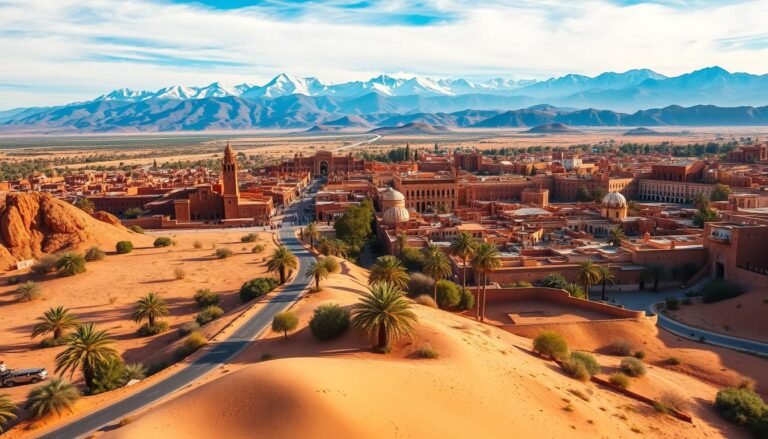
A clear loop guides your travel so drives feel balanced and each stop flows into the next. This overview helps you picture how coastal ports, imperial centres, mountain passes, and dunes connect across the world’s varied landscapes.
From Atlantic coast to High Atlas Mountains and the Sahara Desert
Start north with Rabat and Meknes, then visit the Roman stones at Volubilis before reaching Fes. From Fes you head south toward Merzouga for a sahara desert camel trek and an overnight Berber camp.
Key stops and the practical flow
- Casablanca (start) — Rabat — Meknes — Volubilis — Fes: solid northern history and compact cities.
- Fes — Merzouga: desert immersion with planned breaks in the Ziz Valley and Erfoud.
- Merzouga — Todra Gorge — Ouarzazate — Aït Ben Haddou: canyon views, film sets, and a UNESCO ksar visit.
- Cross the high atlas mountains via Tizi n’Tichka (2,260 m) for sweeping viewpoints before finishing in Marrakech.
| Region | Highlight | Best stop length |
|---|---|---|
| North | Imperial cities, Volubilis | 2 nights (Fes base) |
| South | Merzouga dunes, Todra Gorge | 2 nights (including camp) |
| West return | Aït Ben Haddou, Tizi n’Tichka | 1–2 nights |
Use this map of highlights to plan how many nights to spend in each place and where guided visits will add the most value.
Day-by-Day Plan: Your Journey Through Imperial Cities, Souks, and Sands
A straightforward daily schedule helps you balance guided tours and free time for discovery. Below is a compact outline so you know what to expect each morning and evening.
Casablanca arrival and Hassan II Mosque
Arrive and settle in, with an optional visit to the Hassan II Mosque if your flight allows. A welcome dinner sets the tone.
Rabat, Meknes, and Volubilis en route to Fes
Travel north with guided stops in Rabat and the Roman ruins at Volubilis before arriving in Fes for an atmospheric evening.
Fes medina immersion and traditional crafts
Take a morning medina tour to see tanneries, madrasas, and workshops. Spend the afternoon wandering or visiting a museum.
Crossing to Merzouga and the Sahara experience
Head south via the Ziz Valley and Erfoud’s fossil shops. At sunset, mount a camel for a ride to a Berber camp under wide, starry skies.
- Next moves: Todra Gorge for cliff walks and carpet cooperatives.
- Then: Ouarzazate and Aït Ben Haddou with film-set highlights.
- Final stop: Cross Tizi n’Tichka into Marrakech for a guided city orientation and an evening in Jemaa el-Fnaa.
For a booked tour option that matches this schedule, see the recommended route at the imperial cities tour.
| Phase | Main Stop | Focus |
|---|---|---|
| North | Fes | History & crafts |
| South | Merzouga | Desert & camel camp |
| Return | Marrakech | Markets & monuments |
Casablanca Essentials: Airport Tips and the Hassan II Mosque
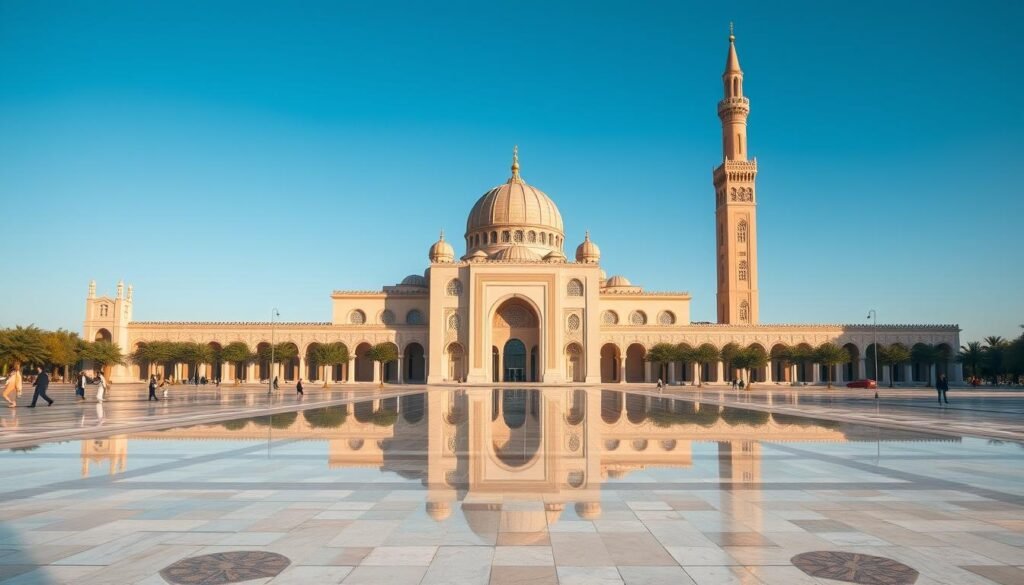
Landing at the international gateway, you’ll quickly decide whether to rest or head south by train. Your first choices shape the energy you bring into the trip.
When to stay versus when to go: If you arrive late, pick a convenient hotel near the airport and sleep well. If your flight arrives early, the morning train to Marrakech takes about 2.5 hours and is a calm, stress-free way to start.
Timing a quick visit to the hassan mosque makes sense if you are not staying overnight. The mosque’s oceanfront setting offers a memorable photo stop without losing time on connections.
- Decide based on how fresh you feel after the flight.
- Plan transfers: taxis or shuttle to the station are the best way to avoid delays.
- Buy train tickets in advance to cut queue time and simplify the transition from international to domestic travel mode.
- Build buffer time for flight delays so your first hours stay relaxed.
| Choice | Best for | Notes |
|---|---|---|
| Overnight near airport | Late arrivals, early departures | Rest first, explore the city later; easy hotel access |
| Train to Marrakech | Early arrivals, energetic travellers | 2.5-hour ride, comfortable seats, saves evening time |
| Quick mosque stop | Short layovers | Hassan mosque oceanfront view, efficient cultural hit |
Marrakech Highlights: Souks, Koutoubia Mosque, and Jemaa el-Fnaa
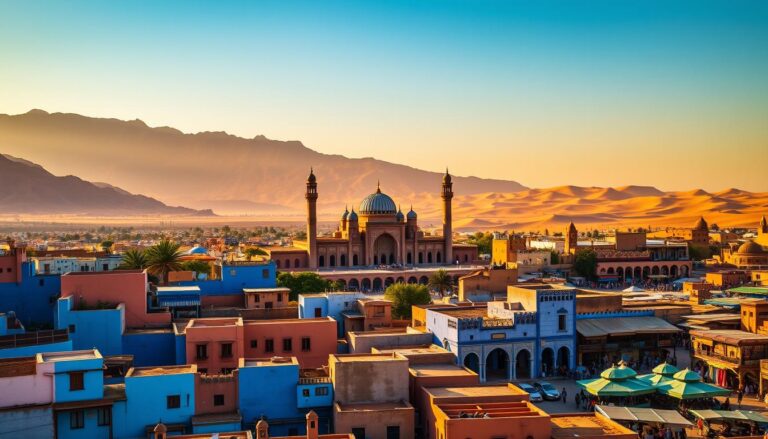
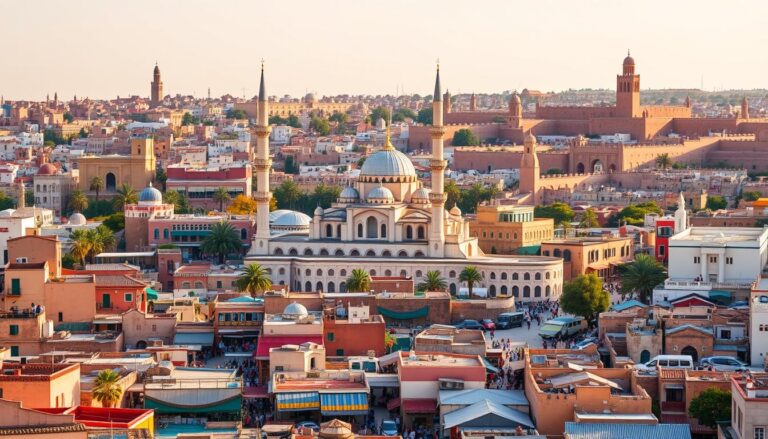
Start your Marrakech visit by using the city’s famous minaret as a navigational anchor through winding markets and quiet courtyards. The Koutoubia Mosque is easy to spot and helps you keep orientation while you explore.
The medina is a UNESCO-listed maze of textiles, spices, jewelry, and crafts. Cluster visits to Bahia Palace, Saadian Tombs, and El Badi so you spend more time inside each site than travelling between them.
- Use the Koutoubia Mosque as your central landmark to return to after wandering the souks and narrow streets.
- Visit Ben Youssef Madrasa and Majorelle Garden early to avoid queues and soak up shade and colour.
- Take a short guided orientation to decode lanes, then explore the souks for leather, lamps, and spices with confidence.
At night, Jemaa el-Fna pulses with musicians, storytellers, and street food stalls. Choose clustered grills for safe, tasty bites and leave room for rooftop tea or a sunset view—small surprises make the whole experience memorable.
High Atlas Mountains to Aït Ben Haddou: Scenic Passes and UNESCO Heritage
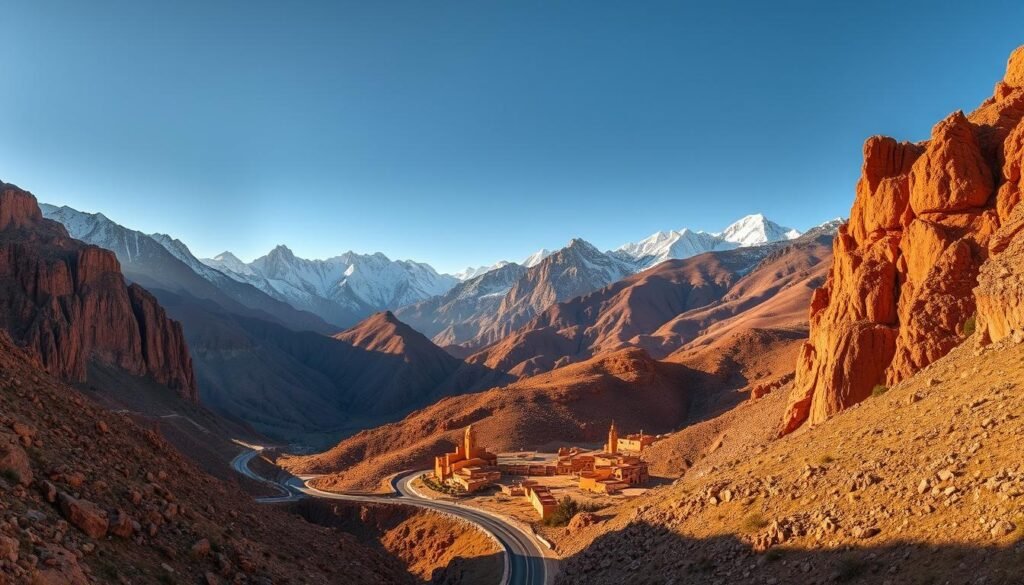
Drive high into the atlas mountains and you’ll trade city noise for crisp air and cliffside panoramas.
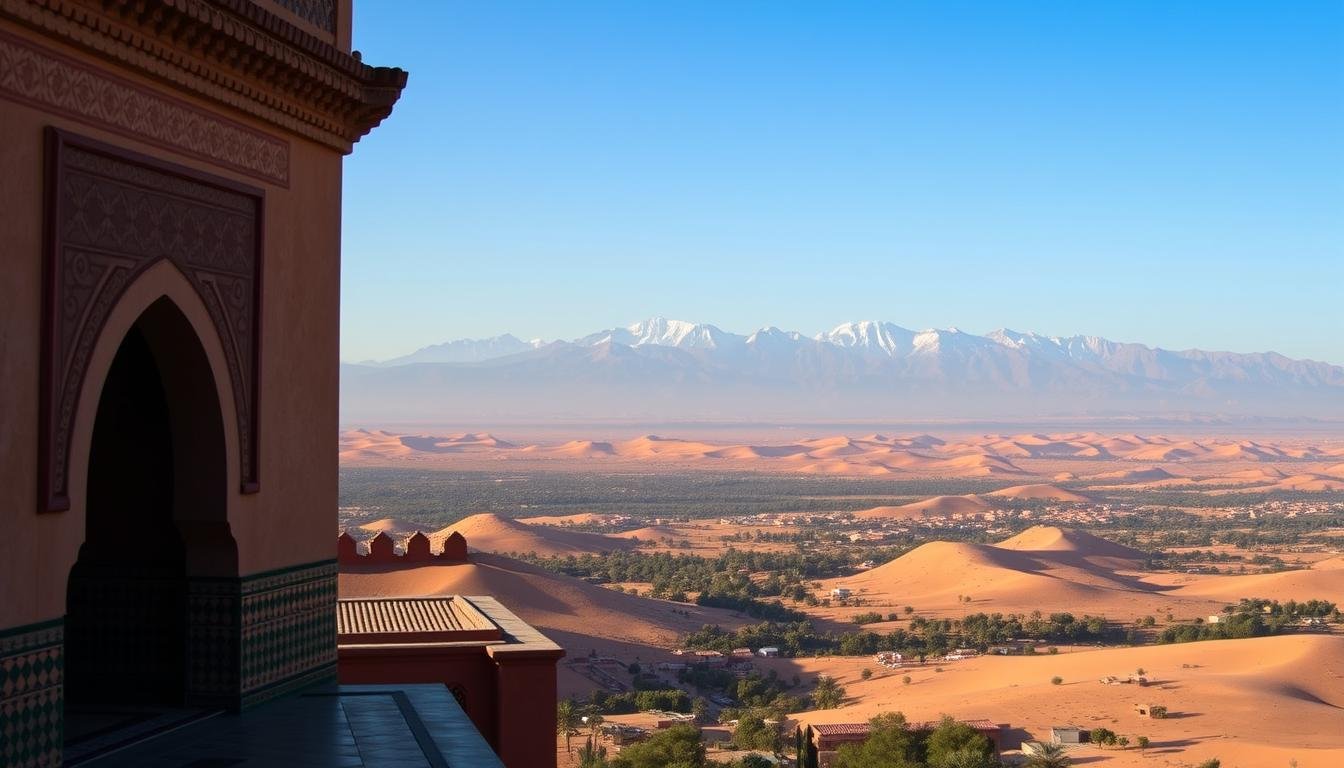
The Tizi n’Tichka pass tops out at 2,260 m, so plan photo stops at the crest. You’ll see terraced slopes and stone hamlets that show how local life has adapted to the slopes.
Pause for tea in a family-run stop to taste tagine and meet villagers without rushing. These brief breaks add comfort and local colour to a long drive.
Tizi n’Tichka pass views and Berber villages
The ascent gives sweeping views of deep valleys and rugged peaks. Watch for shepherds and stacked stone houses that create a timeless scene.
Guided visit to Aït Ben Haddou’s ksar and film history
Aït Ben Haddou is a fortified ksar and a unesco world heritage spot. Use local guides to thread the alleys, reach hilltop viewpoints, and hear film-era stories.
Ouarzazate’s studios sit nearby and have hosted major productions. If time allows, an optional studio stop links screen memories to the real places you’ve just seen.
- Plan to arrive in softer light for the best photos of mud-brick walls.
- Hire guides at the ksar entrance to save time and learn context.
- Build flexibility for weather at altitude and for short village detours.
| Feature | What to expect | Tip |
|---|---|---|
| Tizi n’Tichka pass | Panoramic viewpoints at 2,260 m | Stop for photos and lightweight layers |
| Berber village | Terraced fields and stone hamlets | Support local cafés for tea and snacks |
| Aït Ben Haddou | Fortified ksar; world heritage site | Book a guided walk for viewpoints and history |
| Ouarzazate studios | Film sets and behind-the-scenes tours | Combine with ksar visit if time permits |
To see how this stretch fits the full route, check the full route details and plan your timing so the mountains lead you into desert calm.
Sahara Desert Experience: Camel Trek, Luxury Camp, and Night Skies
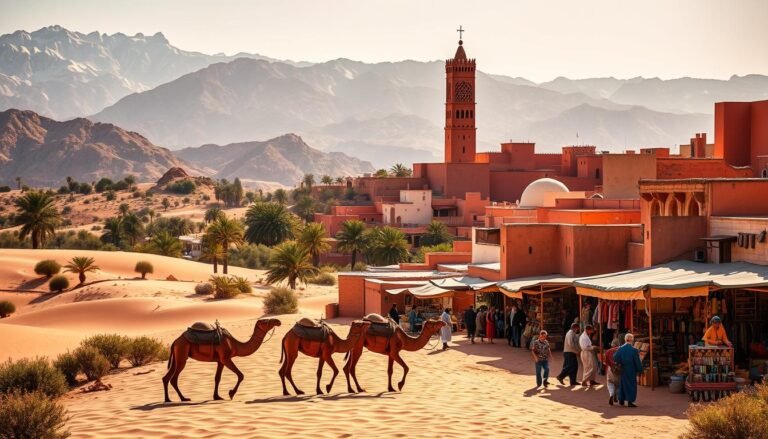
As the sun leans low, you mount a camel and follow a slow line into the sands. The approach at golden hour makes the whole desert glow and the pace helps you breathe out the day.
Merzouga dunes, sunset rides, and camp comforts
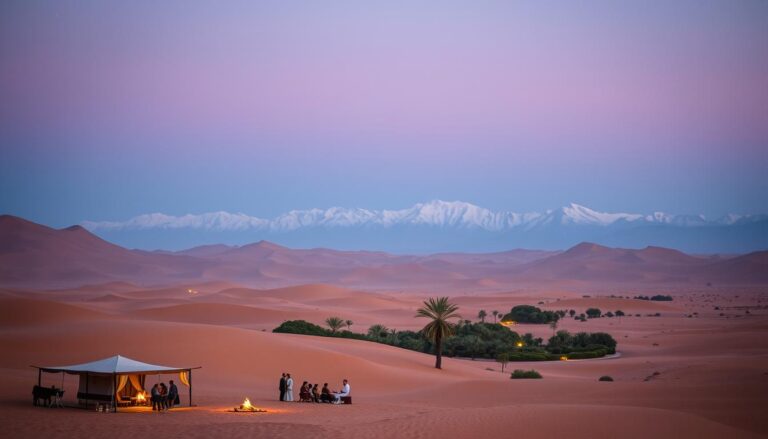
On arrival at a Berber-run camp you are greeted with mint tea and warm smiles. Tents offer proper beds, private spaces, and surprisingly hot water for showers so you can freshen up.
After a hearty dinner, staff often play drums by the fire. When skies are clear, you step away from light and watch the stars spill across the night.
What to pack for sand, stars, and chilly nights
Pack a scarf or shemagh, layers for cold evenings, closed-toe shoes, and a small flashlight for walking at night. Bring a soft bag for the camel ride and leave bulky luggage with the support vehicle.
- Minimise light near camp to see the clearest stars.
- Carry zip bags for electronics and a small brush to clear sand.
- Keep bottled water handy and budget tips for handlers and staff.
| Moment | What to expect | Tip |
|---|---|---|
| Sunset ride | Golden light, slow camel approach | Bring a light scarf and a camera with spare battery |
| Camp comforts | Private tents, beds, hot water | Confirm hot water availability when booking |
| Night stargazing | Minimal light, distant drums | Step away from fire and silence phones |
| Morning return | Sunrise over dunes, camel or 4×4 option | Choose return based on energy and schedule |
Fes and the North: Medina Maze, Tannery Views, and Chefchaouen’s Blue Streets
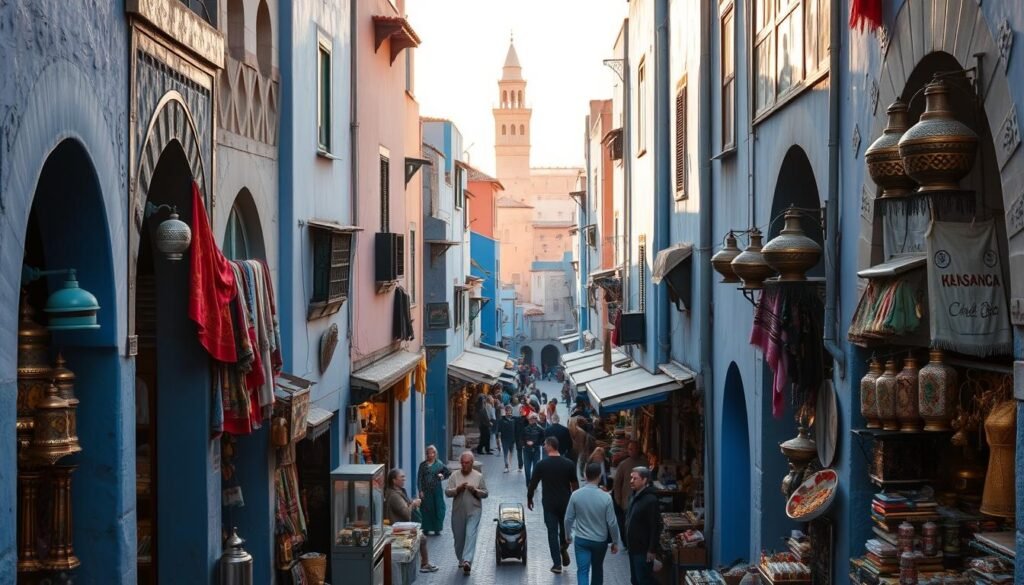
Fes opens like a living museum, where narrow lanes hide centuries of craft and curious corners. A short guided intro helps you find bearings, then you can roam artisan quarters at your own pace.
Top Fes sights and quick stops
Highlights: Bou Inania Madrasa, Chouara Tannery, Bab Boujloud, the Royal Palace gates, Jnan Sbil, Merenid Tombs, and the Mellah all sit close enough to visit in relaxed segments.
Start with a guide for the medina’s layout. Then head to tannery terraces for front-row views of dye pits and time-honoured techniques.
- Pause at Bab Boujloud for photos and easy navigation.
- Unwind in Jnan Sbil’s gardens between market visits.
- Climb to the Merenid Tombs near golden hour for sweeping panoramas.
Optional trip to Chefchaouen
Chefchaouen is roughly 3.5 hours each way, so plan smart if you add this stop. Many travellers find four hours in town enough for photos, a meal, and gentle wandering.
Chefchaouen’s blue-washed alleys are ideal for street photography and slow exploration. Vendors are generally calmer here than in other hubs, so enjoy the different tempo and meet friendly local people.
| Sight | What to expect | Tip |
|---|---|---|
| Bou Inania Madrasa | Fine tilework and courtyard calm | Visit early to avoid crowds |
| Chouara Tannery | Historic dye pits and terraces | Use the viewing platforms for photos |
| Merenid Tombs | City panoramas at sunset | Bring a light jacket for wind |
Volubilis, Meknes, and Rabat: Time-Travel Through Morocco’s History
Walk among columns and mosaics that map Morocco’s classical past on a gentle hill above fertile plains.
Volubilis rewards a slow look. The roman ruins show temples, villas, and intricate mosaics that tell daily stories. Join local guides for context; a short tour brings the stones to life.
Meknes then offers scale and ambition. You’ll see monumental gates and the mausoleum of Moulay Ismail. These ruins and palaces reveal how sultans shaped the imperial cities.
In Rabat, pause at the Hassan Tower and the Kasbah of the Udayas for a coastal contrast. The site pairs modern governance with calm historic lanes.
- Compare restoration: what’s original, what’s rebuilt.
- Check opening times to avoid heat and crowds.
- Decide if a brief Meknes city tour fits your energy.
| Feature | What to expect | Tip |
|---|---|---|
| Volubilis | Roman columns and detailed mosaics | Book a guide for chronology |
| Meknes | Grand gates and sultanate monuments | Visit gates at soft light for photos |
| Rabat | Hassan Tower and Kasbah views | Combine a short city tour with seaside walks |
These linked stops make the route feel like a moving museum rather than a transit slog. You’ll end the day having walked through layered heritage, not just ticking off ruins.
Getting Around: Trains, Transfers, and Sahara Tours
Good timing and reliable transfers are the backbone of a stress-free trip. Start by picking connections that match your energy and schedule so you waste less time on the road and more time exploring.
Casablanca–Marrakech train timing and comfort
The Casablanca–Marrakech train takes about 2.5 hours and is a comfortable way to begin. Seats are roomy and departures follow a clear timetable, so you can plan mornings without stress.
4×4 vs. minivan on desert routes and picking reliable guides
For overland legs to the Sahara, 4×4 Land Cruisers handle rough tracks and allow quick photo stops. Minivans suit larger groups and budgets; they are efficient on main roads.
Choose operators that list what their tour covers—transfers, breakfasts, several dinners, the camel trek, and one camp night—so there are no surprise charges.
- Confirm pick-ups at riads or parking points near medinas.
- Plan contingency time for the High Atlas pass; weather or traffic can add delays.
- Send main luggage by vehicle and take only essentials on the camel.
- Verify guides’ credentials and their communication style for safety and storytelling.
| Option | Best for | Tip |
|---|---|---|
| Train | Fast, relaxed city link | Book ahead to secure seats |
| 4×4 | Off-road, flexible stops | Great for photography and rough tracks |
| Minivan | Groups and budget travel | Comfortable on paved stretches |
Final way forward: pick an operator that balances comfort with clear inclusions and flexible cancellations. That keeps your travel straightforward and your time on the road productive.
Where to Stay: Riads, Desert Camps, and Tried-and-True Hotels
Pick accommodation that suits how you like to travel: intimate courtyards, poolside comfort, or a lantern-lit desert camp.
Staying inside the old medina brings atmosphere to every step. A restored riad places you within walking reach of markets, palaces, and rooftop cafés. AnaYela is a traveller favourite for its palace-riad charm and personalised service.
Staying in the old medina for atmosphere and easy access
Choose riads when you want quiet courtyards, rooftop breakfasts, and instant access to lanes. Check room size and stair access—some are compact and vertical compared with standard hotels.
Consider modern hotels if you prefer pools, on-site dining, and easy vehicle access at the city edge. They often suit longer arrivals and heavy luggage.
In the desert, pick a camp that lists comforts: proper beds, private bathrooms, and hot showers. A single night at a luxury camp can be the highlight if sky clarity and stargazing matter to you.
- Book places with responsive hosts who arrange medina drop-offs and help with bags through lanes.
- Look for rooftop views and shaded patios as quiet refuges after market walks.
- Compare price tiers across cities so you can spend more where atmosphere matters most.
- Read recent reviews for water pressure, heating, and breakfast quality—these small details shape your stay.
- Confirm early breakfasts or takeaway options on departure days, especially before long drives.
| Type | Comforts | Best for |
|---|---|---|
| Medina riad | Courtyard, rooftop breakfast, character | Immersive city stays, walkers |
| Modern hotel | Pool, parking, larger rooms | Families, heavy luggage, convenience |
| Luxury desert camp | Private tent, hot water, evening music | Stargazing night, unique experience |
Budget, Prices, and Smart Shopping: Make the Most of Your Dirhams
Know what to expect in prices before you arrive so you can relax and enjoy your time. Many packages include seven nights’ accommodation, breakfasts, several dinners, airport transfer, and a Sahara camel trek. That bundle often gives strong value compared with booking every night separately.
Typical costs and camp comparisons
Your realistic daily budget should cover meals, entrances, small taxis, and tips. Allow extra for a guided city walk in Fes or Aït Ben Haddou—guides save time and reveal context you’d miss alone.
Camp prices vary: shared tents are cheapest, mid-range camps offer basic private tents, and luxury camps provide en-suite facilities and hot water. Choose based on comfort and how much a quiet night under the stars is worth to you.
Bargaining and buying local goods
Shopping for argan oils, soaps, spices, and fragrances is a highlight and often cheaper than overseas. Schedule shopping time so you can compare stalls and avoid impulse buys.
- Bargaining etiquette: smile, counter politely, and know a fair offer when both you and the seller feel respected.
- Packing fragile items: consider shipping or wrap purchases in clothes and carry them in your hand luggage.
- Track small costs: juice stands, water, and coffee add up—plan a modest daily allowance.
| Item | Typical price (per person) | Tip |
|---|---|---|
| Daily meals & small taxis | £20–£40 | Mix street food and one sit-down meal |
| Guided city walk | £15–£35 | Worth it for medina orientation and saved time |
| Desert camp (shared → luxury) | £20 → £120+ | Compare included meals and en-suite options |
| Argan oil / spices / perfume | £5–£30 | Buy from reputable stalls; test before you pay |
Final tip: pre-book experiences that sell out, set aside tip funds for drivers and camp staff, and leave room in your case for two or three souvenirs that capture the trip’s colour and scent.
Your Next Steps: Lock in Dates, Pack Smart, and Get Ready for an unforgettable Morocco
Set your dates for shoulder-season calm, book essential stays and tours, and leave space for unplanned moments.
Lock core bookings early: airport transfers, the desert camp night, and guided city walks. That protects your time and keeps connections smooth.
Pack smart: layers, sun protection, smart shoes, and a small day bag for markets and stairs. Share plans with your driver or guide and download confirmations.
Prepare a simple daily checklist, allow a little free time for terrace tea or an extra market hour, and set a cash/ATM plan for tips and souvenirs.
Follow this roadmap and you’ll end your trip with clear memories of desert silence, mountain views, and warm local welcomes.