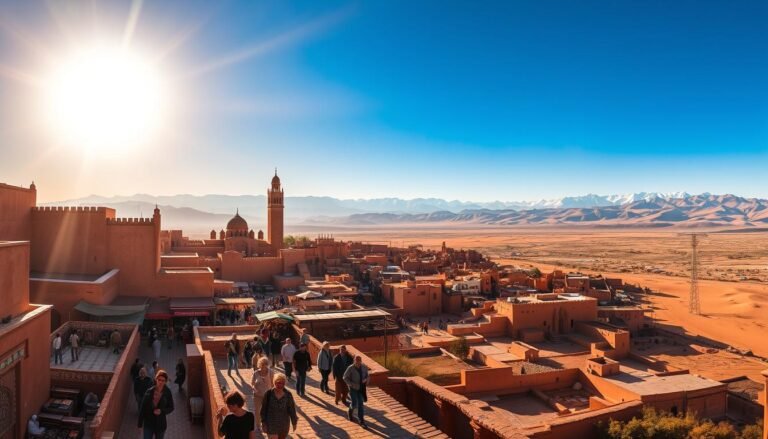
Your Morocco Travel Itinerary 14 Days: Tips & Essentials
Surprising fact: passport control at Marrakech Menara Airport often takes over an hour, so your first hour on arrival can set the tone for the whole trip.
You’ll get a clear plan for a two-week loop that blends Roman ruins, imperial cities, Sahara nights, and Atlantic coast stops into one smooth route. This guide shows the order to visit cities to cut down transit time and when to book transfers or leave plans flexible.
Start smart: book an affordable pre-booked transfer, grab a Maroc Telecom SIM at the airport for about €20 cash (≈20GB), and consider open-jaw flights into Casablanca or Marrakech and out of Tangier or Fes to avoid backtracking.
You’ll also find concise hotel picks, tips for medina wandering, and timing advice for sunrises and rooftop sunsets so your days hit the highlights without rushing.
How to use this 14-day how-to guide for maximum value
Use these practical tips to shape each day so you hit key sights and still enjoy unexpected moments.
Quick approach: skim each section to see what you’ll do that day, then open the data blocks for names, local services, and booking links. That saves time when you’re on the move.
Day tours from Marrakech—like the Atlas valleys or Essaouira—are simple to arrange. Bespoke medina walks with a local expert add context you won’t find on your own.
- Use route logic to add or drop nights; we flag tradeoffs so you can pick the best options for your pace.
- Follow transport tips—train, bus, or private driver—to balance comfort and budget without losing time.
- Save key addresses: SIM desks, riads, and proven day tours to cut waiting and confusion on arrival.
- Mix guided experiences for history or craft tours with free-wandering to soak up local things and atmosphere.
Final note: keep a shortlist of fallback cafés and terraces. This is a flexible guide, not a rigid itinerary.
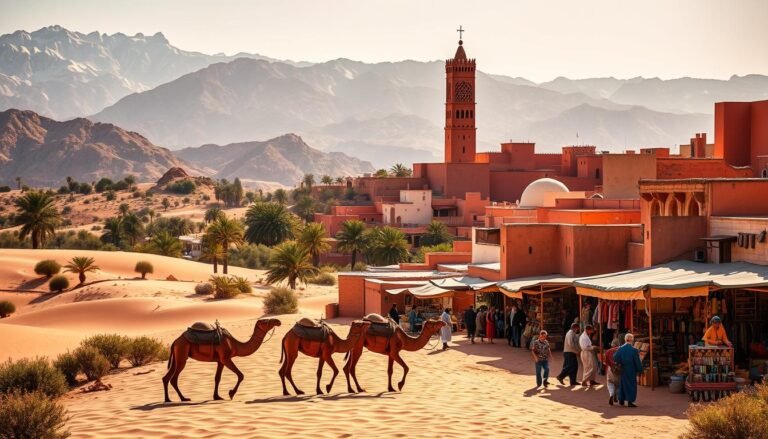
At-a-glance route: cities, desert, mountains, and coast on one epic journey
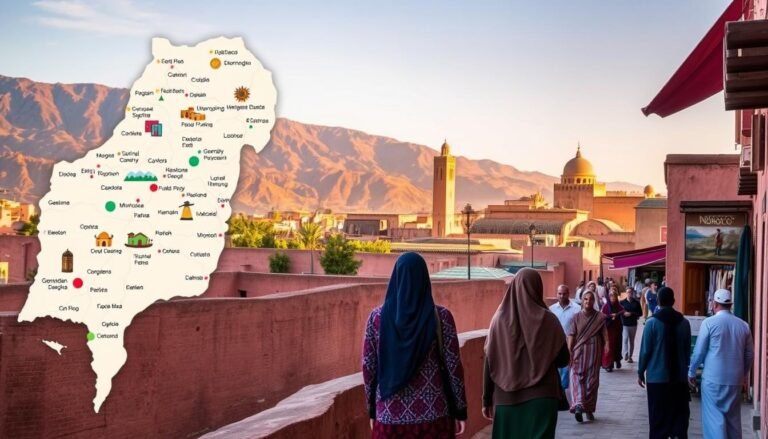
Follow an efficient path from Casablanca or Marrakech north and inland, then sweep back south to Marrakech and the coast.
Suggested open-jaw: fly into Casablanca or Marrakech and out of Tangier or Fes to avoid backtracking and reclaim precious hours.
Start coastal: Hassan II Mosque and the Corniche give a gentle first day before you head north to Chefchaouen and Akchour for blue lanes and Rif mountain walks.
Then turn inland to Roman Volubilis and imperial Meknes, and on to Fes for deep medina immersion. Cross the Middle and High Atlas via Ifrane’s cedar forests and break in Midelt to keep long drives sensible.
Make the Sahara your highlight at Merzouga (Erg Znaigui) with a glamping night, camel sunset, and an early desert sunrise. Continue through Todra Gorge and the Dades curves to Aït Benhaddou, then crest Tichka Pass into Marrakech.
Build in Atlas Mountains day trips (Ourika or Setti Fatma) and a coastal stop in Essaouira if time allows. Open-jaw ticketing is the cleanest way to save time; if you’re tight, skip Essaouira or Chefchaouen and slow your pace in Fes or Marrakech for extra depth.
Optimal flow to avoid backtracking and save hours
- Use trains for Casablanca–Rabat–Marrakech–Fes legs and private transfers for remote spots.
- Keep long drives in daylight and use Midelt as a buffer between Atlas and desert stretches.
- Finish in Tangier for an easy ferry to Spain or fly out of Fes for a final medina wander.
Entry, timing, and first steps: arrivals, SIM, and getting your bearings
A calm arrival sets the tone. Expect queues at passport control—Marrakech Menara can take over an hour. Give yourself easy plans for the first evening and let logistics run their course.
Passport control, airport transfers, and cash on arrival
Pre-book a transfer so a driver waits past immigration; it’s affordable and saves you time. Withdraw sterling or local currency at airport ATMs and carry small notes for tips and taxis.
SIM and data: Maroc Telecom desks vs eSIM options
Head to the Maroc Telecom desks for the most reliable option. You’ll usually get about 20GB for roughly €20 cash—good coverage across cities and rural legs.
- If your phone supports eSIM, compare prices before you fly—eSIMs can be pricier than the physical SIM.
- If you land late, keep plans simple: hotel transfer, quick dinner, and a full morning when services open.
- Keep your passport handy for check-in, and download offline maps before you leave home to save precious hours on site.
Casablanca warm-up: Hassan II Mosque, Corniche, and a relaxed first night
Begin gently in Casablanca so you can recover from the flight and still see a highlight or two.
Top stays near the action
Pick accommodation close to the waterfront or central boulevards for simple logistics. Four Seasons Casablanca offers a beachfront spa and polished rooms (Booking ~8.8). Barceló Casablanca is a modern, central choice with average Booking scores near 7.8. Odyssée Boutique provides Moroccan charm near the medina and seafront.
- Walk the Corniche for fresh sea air and a gentle reset, then visit Hassan II Mosque to appreciate the dramatic oceanfront architecture and cultural history.
- Swing by Rick’s Café if time allows for a relaxed lunch or pre-evening drink.
- Ask your hotel about guided mosque visit timings; tours help you understand the site’s significance.
- For a stress-free first night, dine near your hotel, keep bags light, and plan a simple breakfast before you depart.
- Confirm pickup points with your driver—central hotels like Barceló simplify meetups.
Treat Casablanca as a soft on-ramp: rest well and set your pace for the medina mazes ahead.
Chefchaouen and Akchour: get lost in blue streets and chase waterfalls
The blue medina invites relaxed exploration, where each turn offers a new shade and a quieter corner to discover.
Photo tips: drift through the painted streets and deliberately get lost—duck into side alleys to escape tourists and find peaceful frames. Ask before you photograph people; focus on doors, pots, and stairways for respectful shots.
Rooftops and sunset
Plan a rooftop pause in the late afternoon for soft light and city views. Then hike up to the Spanish Mosque for a wide sunset over the Rif and the medina below.
Akchour hikes
Pace your Akchour outing—God’s Bridge and the waterfalls take several hours round-trip. Wear grippy shoes, bring water and snacks, and consider Ermitage d’Akchour if you want a quiet mountain base.
- Early morning or late day gives the best light and fewer crowds.
- Stay in town for medina focus or choose hillside riads for panoramic views.
- Finish with mint tea on a terrace as the blue tones deepen into evening.
Volubilis and Meknes detour: Roman history meets imperial Morocco
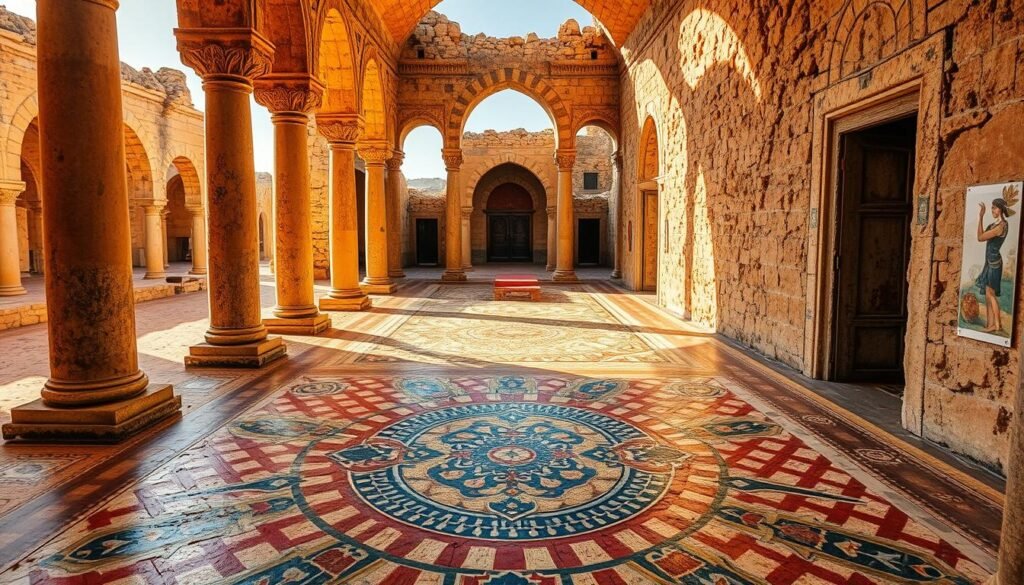
Visiting Volubilis gives you a rare chance to stand among well-preserved Roman ruins and imagine daily life centuries ago.
What you’ll see: Volubilis is UNESCO-listed and shows intact mosaics, a forum, baths, and a triumphal arch. Allow a couple of hours and hire a local guide to bring the site’s history to life.
The site is exposed with little shade. Bring water, a hat, and sunscreen so you can linger without discomfort.
Best time and practical tips
- Arrive early or late to avoid the harsh midday sun and to see mosaics glow in angled light.
- Budget around two hours with a guide to connect forum, baths, and the arch to daily Roman routines.
- Focus on mosaic-rich houses and detailed scenes; photograph details rather than empty expanses.
- Continue to Meknes for imperial gates, medersas, and a contrasting architectural style.
- If short on time, prioritise the floor mosaics and triumphal arch, then enjoy a relaxed Meknes lunch.
| Site | Key highlights | Suggested time | Practical note |
|---|---|---|---|
| Volubilis | Mosaics, forum, baths, triumphal arch | 2 hours | Hire a guide; bring water and sun protection |
| Meknes | Imperial gates, medersa courtyards, royal stables area | 1–2 hours (or longer for lunch) | Good place to break driving; try a local restaurant |
| Detour logistics | Olive grove views, staging with driver | Flexible | Ask driver for an efficient in-and-out route |
Final note: Volubilis is a place where silence helps. Let a guide connect the stones to broader history while you enjoy the quiet countryside and the small things to see.
Fez immersion: medina maze, Chouara tannery, and artisan quarters
A guided first pass makes the old city kinder. Start with a local guide to learn key lanes, then allow time to wander on your own and get lost without worry.
How to navigate 9,000 alleys without stress
The medina has over 9,000 alleys and is car-free—expect donkeys and handcarts. Keep small bills, wear a crossbody bag, and step aside politely on narrow lanes.
Leather, metalwork, bread ovens, and hidden rooftop views
Visit Chouara tannery in the morning for the best light and balcony views of traditional dye pits. Watch copper hammered into bowls, mosaics cut by hand, and leather finishes in artisan quarters.
Seek a calm rooftop café or riad terrace—Riad Rcif and Hotel Sahrai both offer lovely vantage points to rest and see the medina scale. Admire Al-Qarawiyyin from its ornate entrances and pause at neighborhood bread ovens to watch routine life unfold.
- Hire a guide for your first sweep, then circle back solo.
- Keep valuables secure but stay relaxed around friendly local people.
- Split Fes across two days if you can; the medina rewards slow discovery.
High Atlas transition: Ifrane coffee stop, cedar forests, and Midelt overnight
Leave Fes behind and climb toward the atlas mountains. Stop in Ifrane for a coffee and a quick stretch in its tidy, alpine streets.
From there you’ll thread through cedar forests where Barbary macaques play. Expect a 3–4 hour drive to Midelt — a practical pause to break a long journey.
Midelt is a working town, not a showpiece. Choose a comfortable stay like Villa Pomme d’Or or a characterful kasbah such as Kasbah Izoran for the night.
Roads become winding in the High Atlas, so prefer daylight driving. If you plan a bus, confirm schedules early to avoid long waits.
- Pack snacks and water to limit stops.
- Take a short village walk to see local life without adding hours.
- Layer up: temperatures can swing at altitude.
- Confirm next-day pick-up times if you have a 4WD transfer to the desert.
Sahara segment: Merzouga dunes, camel sunset, and a night under the stars
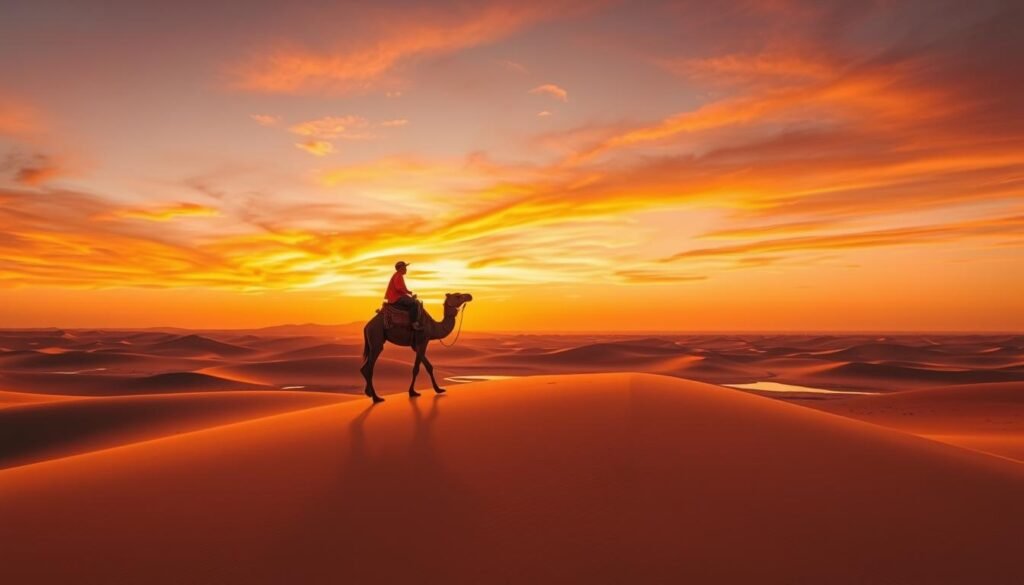
Cross the High Atlas and arrive at Merzouga by afternoon, where dune silhouettes begin the real desert story.
From Midelt you’ll drive about four hours over a 2,000m pass and down toward the Erg Znaigui edge. By late afternoon you switch to 4WDs for the final rise into the sand.
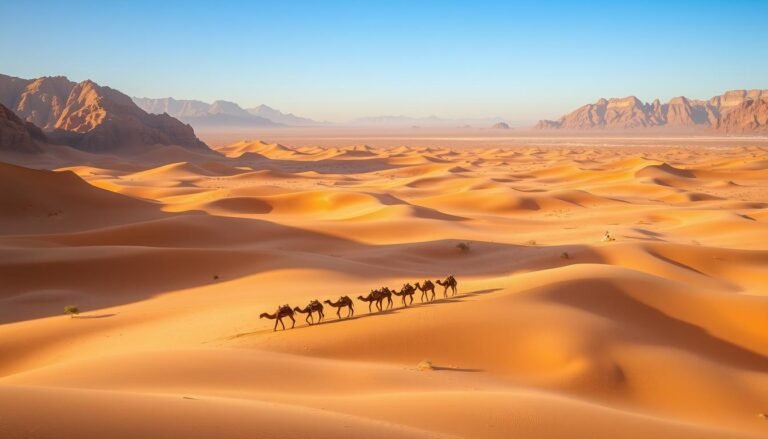
Settle into a glamping tent with proper beds, heaters, and a private dinner. Then ride a camel to a high dune for sunset colours. Back at camp, sip mint tea by the fire while local music and stars complete the moment.
4WD over Erg Znaigui, glamping comforts, and mint tea by the fire
Choose camps with reliable 4WD drivers and clear safety records. Ask about tent spacing and toilet facilities if privacy matters to you.
Sunrise, sandboarding, and 4×4 options for your desert morning
Wake early for a sunrise camel ride or climb a dune on foot to watch the light spill across the sand. After breakfast, try sandboarding or a short 4×4 outing to explore quieter dunes.
- Arrival timing: get to the dune edge by afternoon so you aren’t rushed.
- Packing: leave main luggage at the hotel; bring layers, camera gear, and evening shoes.
- Comfort tips: heaters, beds, and hot meals make the night cosy; bring a warm jacket for late hours under the night sky.
- Tour choice: pick operators who balance authenticity—local food and music—with safe vehicles and good gear.
Oases, gorges, and kasbahs: Aït Benhaddou, Todra Gorge, and the Dades curves
Follow the green ribbon of river oases toward Todra Gorge for a sharp, cooling contrast to the dunes. The canyon’s sheer walls and a clear stream make this a memorable place to stretch your legs and walk a short canyon trail.
Continue along the Dades Valley and tackle the famous hairpins. Stop at pullouts for panoramic photos; late afternoon light makes the rocks glow.
Explore Aït Benhaddou’s ksar by climbing its alleys to the hilltop granary. This UNESCO-listed spot shows why filmmakers keep returning and rewards you with sweeping views of the valley below.
If you have time, detour through Rose Valley in bloom season and visit Ouarzazate’s kasbahs and film studios for local context. Break drives into 2–3 hour chunks and plan lunches on shaded terraces in small towns.
- Confirm inclusions when you join a tour; you want enough hours to walk, not just snap from the car.
- Ask your driver for the best photo pullouts along the Dades curves.
- Pack layers—the valleys warm during the day while passes can bring a chill in the atlas mountains.
- Respect village privacy around Aït Benhaddou and buy crafts directly from artisans when you can.
- Cross the Tichka Pass toward Marrakech in daylight for safety and better viewpoints on the way.
| Place | Highlight | Suggested time | Practical tip |
|---|---|---|---|
| Todra Gorge | Sheer canyon walls, river walk | 1–2 hours | Wear grippy shoes; bring water |
| Dades curves | Switchbacks and panoramic rock layers | 30–90 minutes | Ask driver for pullouts; best late afternoon light |
| Aït Benhaddou | UNESCO ksar, hilltop views | 1–2 hours | Stick to public lanes; respect local life |
| Ouarzazate & Rose Valley | Kasbahs, film studios, seasonal roses | 1–3 hours (or longer) | Visit studios mid-morning; Rose Valley in bloom season |
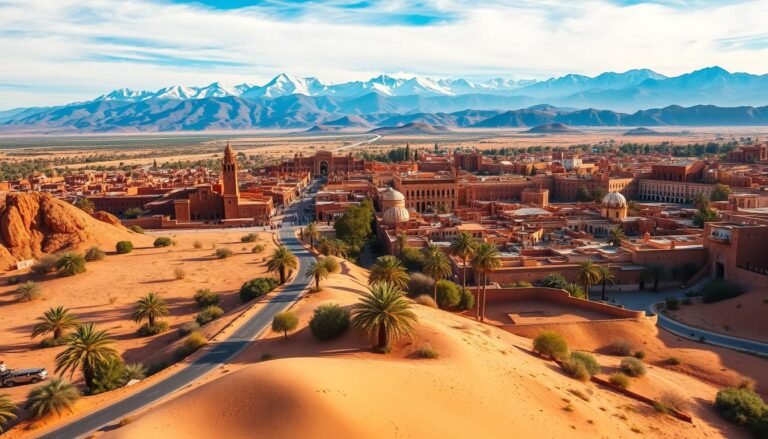
Marrakech essentials: souks, medina highlights, rooftops, and mint tea moments
Marrakech unfolds best when you mix a guided medina sweep with relaxed rooftop pauses.
Begin with a bespoke medina tour to orient yourself around Koutoubia, Bahia Palace and Ben Youssef Madrasa. A guide points out hidden artisan corners—leather workshops, metalworkers and the little bread ovens you might otherwise miss.
Bahia Palace, Ben Youssef Madrasa, Koutoubia, and Jemaa el-Fnaa
Time palace and madrasa visits for early morning to avoid crowds. You’ll see detailed woodwork, zellij tile, and calm courtyards when light is soft.
Finish the afternoon near Jemaa el-Fnaa so you catch the square as it becomes vibrant with storytellers and food stalls.
Garden pause: Majorelle, Yves Saint Laurent Museum, and café breaks
Spend a morning at Majorelle Garden, then step into the YSL Museum for a curated look at colour and craft tied to the city’s style.
- Do this first: bespoke medina tour to map key lanes and sights.
- Tea break: pause for mint tea on a rooftop by the Spice Square as dusk settles.
- Shop smart: navigate leather and metalwork souks with a guide, then return for unhurried browsing.
- Slow things down: visit a hammam or watch bread ovens to see everyday neighbourhood life.
Rooftop lunches give shade and perspective—pick terraces that look over minarets and the distant Atlas. Keep small change for juices and snacks so you move freely through the city without repeated ATM stops.
Day trips that pay off: Atlas Mountains and Essaouira coastal escape
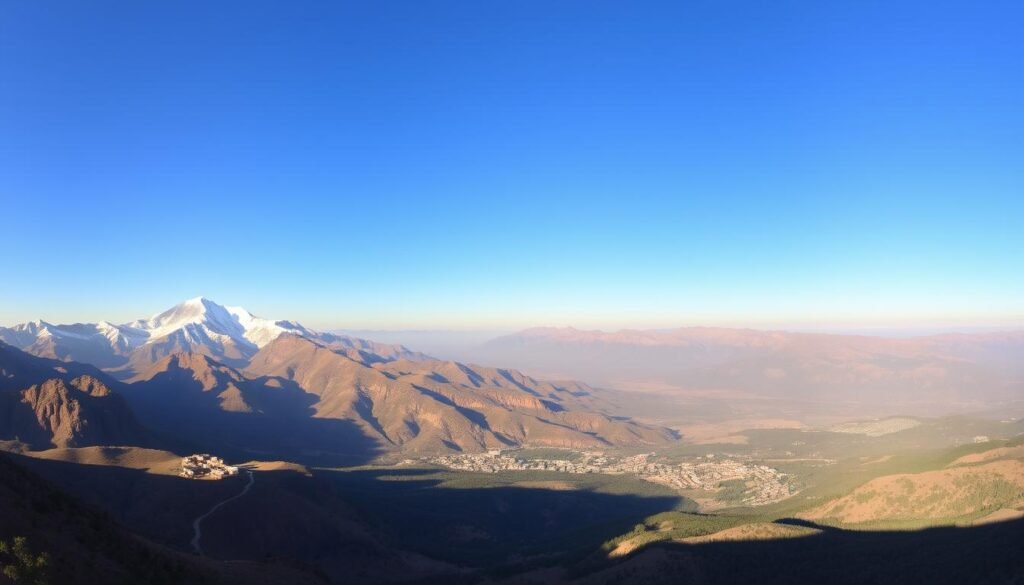
Take a full day out of Marrakech to breathe mountain air and taste village life in the Ourika Valley.
Head into the atlas mountains for easy photo stops, a visit to a Berber home for tea, and a short hike to Setti Fatma waterfalls. Support women-run argan cooperatives on the same route to learn how oil is made and to buy directly if you wish.
Ourika Valley, Setti Fatma, and argan co-ops
Book early starts to fit more in. Combine a morning waterfall walk with a village lunch and return by late afternoon for a rooftop dinner in Marrakech.
Essaouira: ramparts, harbour, and beach time
Essaouira sits about 2h45m away. Stroll the fort walls, watch the busy fishing port, and browse calmer galleries. Time a seafood meal by the harbour and try a kitesurfing taster if the wind suits.
- Choose private drivers for flexibility or group tours via GetYourGuide for budget ease.
- Pack layers—mountain air and coastal breezes can surprise you.
- Alternate mountain and city trips so you don’t burn out.
Morocco travel itinerary 14 days: transport, tours, and time savers
Smart connections—trains for cities, buses for secondary routes, and private cars for remote legs—save precious hours on the road.
Trains link Marrakech, Casablanca, Rabat and Fes. First class usually offers reserved six-seat compartments for a small price increase, which makes your journey more predictable and comfortable. Buy tickets at the station or via 12Go to secure seats during busy periods.
Trains, buses, and private transfers between cities
Use buses like CTM and Supratours for Chefchaouen and Essaouira where rail doesn’t reach. Book a day or two ahead in peak season to avoid sold-out departures.
Private transfers are the best option for multi-stop itineraries and remote stretches. They save you time compared with piecing together local buses and taxis and let you arrive before dusk for easy check-in.
When to book tours on the ground vs online
For signature museums and top restaurants, book online to guarantee entry and save queuing time. For desert and multi-day tours (most run 3–4 nights through Aït Benhaddou, Todra and Dades), compare group size and lodging standards.
- If you’re on a tight budget, haggle on the ground for desert tour deals—but confirm inclusions.
- Balance your schedule: pre-book one day trip (Atlas or Essaouira) and leave another flexible for weather or energy levels.
- Keep digital and offline copies of tickets; station Wi‑Fi can be patchy and pickup points in medinas often need clear rendezvous instructions.
| Mode | Best for | Booking | Time tip |
|---|---|---|---|
| Train (1st class) | Major city hops | Station / 12Go | Reserve seats for comfort |
| Bus (CTM/Supratours) | Secondary routes | Buy 1–2 days ahead | Direct lines reduce connections |
| Private transfer | Remote legs & multi-stop | Book in advance | Start early; arrive before dusk |
Where you’ll sleep: riads, desert camps, and rooftops across cities
Your choice of place to stay shapes every morning and evening. Pick a central option to cut walking time, or choose a hillside property for quiet views. Balance practical needs with the mood you want each night to have.
City stays and hillside viewpoints
In Marrakech, a riad near the Kasbah or Jemaa el-Fnaa—like Riad Farasha—puts you in the heart of things. Rooftop breakfasts here create instant memories and help you plan early starts.
In Fes, decide between ornate tradition at Riad Rcif or a more resort-style stay at Hotel Sahrai, where a rooftop bar and pool offer city views.
Desert camp practicalities
For the Sahara, choose camps with proper beds, heaters, and reliable 4WD access. Leave main luggage at a base hotel if the operator offers storage and bring a warm layer for cold nights.
- If you’re noise-sensitive, request interior rooms in riads.
- Confirm breakfast times for early tour departures.
- Book boutique properties early in peak season for the best rooms and cancellation flexibility.
- Mix one splurge night (camp or design hotel) with intimate riads for variety.
Practical tip: always confirm meeting points for pickups—many medina riads require a short walk from the gate.
Food, tea, and timing: breakfast, lunch, dinner, and that perfect rooftop hour
A simple meal plan helps you stay nimble on the move and soak up the best rooftop light.
Start with a riad breakfast of fresh breads, honey, olives and hot coffee or tea. This sets a steady pace for morning sightseeing and keeps you fuelled for long medina walks.
Plan a light lunch—think a small tagine, salad or seafood plate in Essaouira—to stay agile between sites. Save one special rooftop dinner for sunset near Jemaa el-Fnaa at spots like Ayaso or Café des Épices; the golden hour lifts any meal.
Mint tea rituals, market snacks, and budget-friendly plates
Make mint tea your pause: accept it at riads, in desert camps by the fire, and at Berber homes in the Atlas. It’s both welcome and a natural time to rest and plan your next lane.
- Snack locally on fresh juices, nuts and market breads to bridge long afternoons.
- Use mid-day café menus to save money and reserve splurges for rooftop dinners.
- Carry small change for quick service and to tip for prompt help finding your next stop.
| Meal | Typical options | Best time | Tip |
|---|---|---|---|
| Breakfast | Bread, olives, honey, coffee or tea | Early morning | Eat at riad to save time and sample local baking |
| Lunch | Light tagine, salad, seafood (Essaouira) | Midday | Choose shaded cafés to avoid heat; try set menus for value |
| Dinner | Rooftop dinner, camp meal by the fire | Sunset / evening | Reserve a rooftop once; desert camp dinners are memorable and social |
Street-smarts and culture: safety, prices, mosques, and respectful travel
Respectful habits and basic precautions help you connect with local people and avoid common hassles.
Mosques are often closed to non‑Muslims; admire facades and step back during prayer times to show respect across the country.
Learn to bargain with a smile in souks—it’s expected and works best when you stay relaxed and fair. In busy tourist spots, expect friendly persistence; a calm “no, thank you” and moving on usually ends the chat.
Always agree taxi fares up front or ask for the meter. Knowing a fair range for short runs saves time and awkwardness. At night, stick to well‑lit main lanes and keep a close crossbody for valuables.
- Carry small change for tips; it greases everyday interactions.
- Dress modestly on village visits and Atlas Mountains day trips; it earns trust.
- Ask before photographing people; accept “no” graciously and focus on doors or tiles instead.
- Use hotel safes for passports; keep copies and stay patient—courtesy opens doors.
| Quick tip | Why it matters | Action |
|---|---|---|
| Agree taxi price | Prevents disputes | Confirm fare or request meter |
| Carry small change | Saves time and shows thanks | Have coins and notes ready |
| Respect mosque rules | Maintains good relations | View from outside; be quiet near entrances |
Final note: Courtesy and patience make simple things smoother for you and the people you meet.
Smart swaps and add-ons: Rabat, Tangier, Casablanca, and extra nights
Consider short detours and extra nights to slow the pace and dig deeper into a few cities.
If you want calmer evenings and seaside air, add Rabat for a gentler capital feel. Walk the Hassan Tower precinct, stroll the medina at a relaxed pace, and take short seaside promenades that give a breather from busier centres.
Make Tangier your finale if you prefer a dramatic send-off. Wander the kasbah, sip at Café Hafa and watch the Strait from the Phoenician Tombs. Ferries to Tarifa or Algeciras provide an easy way to continue to Spain.
Two days where it counts: Fez depth or Marrakech museums
Invest two days in Fez to uncover quieter artisan quarters and tucked-away medina pockets you may have missed first time round.
Or spend two days in Marrakech to focus on smaller museums, hidden riads, and lesser-known gardens. Group museum visits into one dedicated day and keep another day for souks and a favourite rooftop for sunset.
Tangier finale: kasbah strolls, Café Hafa views, and ferry options
For departures, choose between flights or ferries—both are straightforward. A guided tour here can save time and show you the best viewpoints before you decide which way to cross the Strait.
- Rabat: quieter medina and seaside walks.
- Tangier: kasbah, Café Hafa, Phoenician Tombs, ferries to Spain.
- Casablanca: return for a focused look at Hassan II Mosque and modern architecture.
- Two-day option: Fez for depth or Marrakech for museums and rooftops.
| Swap | Why add it | Best fit |
|---|---|---|
| Rabat | Quieter pace, coastal breeze | Mid-route calm stop |
| Tangier | Great finale, easy ferry links | End of trip — ferry to Spain |
| Casablanca return | Architecture and modern city life | Extra museum/architecture day |
Your 14-day Morocco journey, wrapped and ready to book
This wrap-up shows how to lock key bookings and leave room to wander without losing momentum.
Quick to-do before you go: secure open‑jaw flights (in at Casablanca or Marrakech, out at Tangier or Fes), book the desert camp night, and reserve main rail segments. High‑speed trains link Tangier–Rabat–Casablanca and sleeper options to Marrakech save precious night hours.
- Lock travel pillars: flights, key train legs, and the desert night — these protect your core time.
- Add guided tours for Volubilis, the Fes medina and Marrakech artisans, then leave free hours to explore.
- Alternate big-city sightseeing with calmer museum, garden or rooftop pauses to avoid burnout.
- Confirm long intercity moves in daylight and keep a small buffer for private transfers on remote legs.
Final step: save confirmations, download offline maps, and pick one rooftop for your first mint tea at golden hour. Your trip is booked; now enjoy the moments that fill the plan.
Tie up loose ends now—secure key tickets, stash confirmations offline, and choose a final night that feels special.
Confirm your main bookings: flights, the desert camp night, and any long train or private transfer. Save PDFs and screenshots so you can access them without roaming data.
Pick one rooftop for a final mint tea or sunset dinner and mark its address in your maps app. That pause will feel like a proper send-off and makes packing simpler.
Leave a little space for spontaneous turns. With the essentials locked in, you’ll travel with calm and enjoy the unexpected moments that make the trip memorable.