Plan Your Trip to Morocco: morocco travel itinerary 10 days Guide
Surprising fact: over a dozen UK carriers link you to Marrakech, Fes, Tangier and Casablanca each week, making this country easier to reach than many expect.
You’re about to get a clear, friendly guide that maps a smooth trip from airport arrival to a relaxing coastal finale.
This short introduction shows how imperial cities, dunes, mountain passes, and the Atlantic coast fit together with realistic travel time and smart pacing.
Practical perks: UK-focused tips on which airports serve direct routes, visa basics for common nationalities, and the best seasons to avoid extreme heat or crowds.
What you’ll gain: a simple way to get around, when to book trains or hire a car, and quick wins like timing markets at dusk and booking key mosque tours.
Morocco at a glance for your 10-day trip
The big picture is simple: this North African country stacks coastal cities, alpine passes, cedar forests, and dunes into one compact route you can cover in a well-paced plan.
Why ten days works: it gives you time to link major cities with the desert and coast while keeping travel time efficient. Most visitors choose 7–14 days, and this length hits a practical sweet spot.
Weather and packing: Mediterranean influences in the north and Atlantic breezes on the west create microclimates. Layering saves you from sharp temperature swings between city streets and mountain passes.
- Currency is the Moroccan Dirham (MAD); medinas often prefer cash, though cards work in bigger shops.
- Key anchors: Casablanca, Fes, Marrakech, Essaouira — each city has a different rhythm and historic feel.
- Staying in riads brings local character and changes the way you experience old quarters.
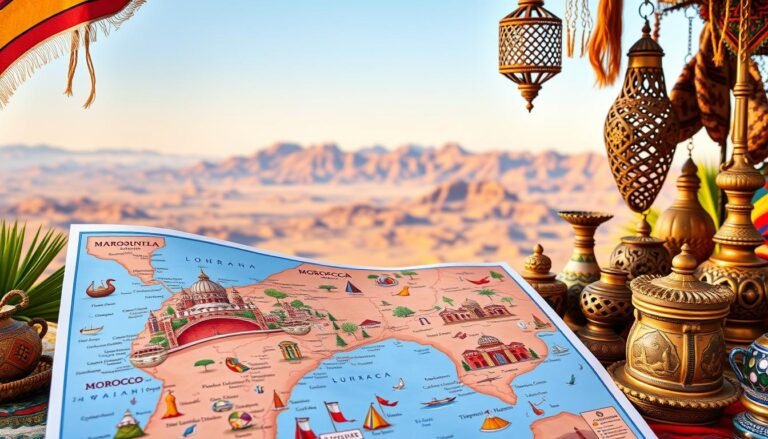
When you open your map, you’ll find the main dots sit close enough to make a smooth loop. This section gives you a clear way to picture places, pace your days, and feel ready to step into each city.
Best time to visit Morocco and how to pace your days
Choose the months that suit your pace: prime windows are September–November and March to early May when temperatures stay mild. These months make city walks, mountain viewpoints, and desert sunsets far more enjoyable.
If you must travel in summer, start early, take long midday breaks, and pick indoor stops to keep energy up. Mid-June can bring extreme heat; some spots reach 45°C.
- Base nights smartly: spend a block in Fes for a medina deep-dive, a night by the dunes, and several nights in Marrakech for landmarks and day trips.
- Many people underestimate distances; stagger longer drives mid-trip and include mountain or gorge stops to break the journey.
- Keep one flexible day near the end for an Atlas hike, a hammam, or a coastal add-on depending on how you feel.
| Season | Comfort | Best for |
|---|---|---|
| Sept–Nov | High | City walking, desert nights |
| Mar–early May | High | Hiking, viewpoints |
| Mid-June–Aug | Low (hot) | Shorter city visits, early starts |
Practical tip: use your first day as a gentle ramp-up—see Casablanca highlights, stroll the Corniche, and avoid packing long transfers into day one. Build buffer time around airports and intercity moves to protect your plan.
Essential map and route overview: cities, desert, and coast
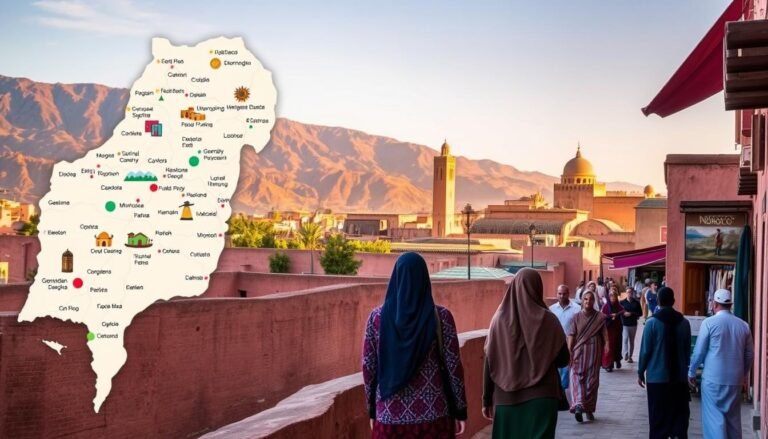
Plotting a practical map helps you see how imperial city highlights, vast dunes, and the Atlantic coast stitch into a smooth loop. A clear plan shows which stretches suit a train and which need a car for scenic stops.
Classic loop: Casablanca – Fes – Sahara – High Atlas – Marrakech – Essaouira
The classic route pairs Casablanca’s Hassan II Mosque with Fes, Midelt, Merzouga (Erg Chebbi), Todra and Dades gorges, Ait Benhaddou, Marrakech, and Essaouira.
Why it works: it avoids excessive doubling back and opens on the coast for a relaxing finish.
Northern twist: Tangier – Chefchaouen – Fes – Atlas – Marrakech
If you start north, add Tangier and Chefchaouen before looping down to Fes and across the atlas mountains to Marrakech.
Trains link major city spines—Casablanca, Rabat, Fes, Marrakech, and Tangier—while buses and a hired car unlock gorges and desert approaches.
- Plan key stopovers: Midelt for the Middle Atlas, Merzouga for dune access, and Skoura or Dades for valley stays.
- Sahara desert timing: arrive at dunes for sunset and leave after sunrise; build time buffers for transfers.
- Agafay desert option: choose Agafay near Marrakech if you want desert drama without long drives.
- Practical tip: trace the Tizi n’Tichka pass on your route and allow extra time for hairpins or roadworks.
Flying from the UK: airports, flight times, and smart arrivals
Picking the right airport shapes how smoothly your arrival and first day will run. From the UK you have direct, frequent routes to Marrakech, Fes, Tangier, Casablanca, and Rabat. Agadir sees more service in summer.
Airlines: EasyJet and Ryanair often have the sharpest fares, while British Airways runs selected schedules. Choose your gateway by the route you plan: Casablanca suits the classic loop, Marrakech works for Atlas-and-coast plans, and Tangier is the best option for a northern start.
Visa-on-arrival for UK nationals is free for up to 90 days; officials may ask for a return ticket. Expect routine luggage scans on exit—keep valuables and camera gear in your carry-on for peace of mind.
- Aim to land early afternoon so you can clear passport control, reach your riads, and still have daylight for a first walk or dinner.
- Have your return ticket and accommodation details ready to speed up checks.
- Withdraw a small amount of MAD at the airport ATM, then use town ATMs for better rates.
- Consider the train or a licensed taxi to the city center and verify fares or ask for a meter.
- If you start in Casablanca, pre-book the Hassan II Mosque tour to match your arrival day.
How to get around: train, bus, taxi, or car for a 10-day journey
A smart transport plan saves you hours and turns long transfers into scenic parts of the trip. Choose fast links for big moves, then switch to local rides for medina entrances and mountain detours.
ONCF trains between major cities
ONCF runs fast, reliable train services connecting Marrakech, Casablanca, Rabat, Fes, and Tangier. Online booking exists but the site is mainly in French. If a ticket machine declines your card, head to the staffed counter and keep your passport handy.
CTM and Supratours buses for flexible stops
CTM offers modern coaches that reach places trains don’t. Supratours (run by ONCF) often has more departures and stations nearer old-city gates. Buses are ideal when your route needs smaller towns or later departures.
Petit vs Grand taxis: city hops and longer rides
Use petit taxis for short city hops; they’re color-coded and cheap. If the meter is off, agree a fair price first and carry small MAD bills.
Grand taxis handle intercity legs and remote villages. Hiring one privately saves time but costs more than a shared seat.
Driving: motorways, mountain passes, and one-way rentals
Rent a car to unlock hairpin passes and valley detours. Motorways are well kept and cut travel hours from your route, though tolls apply. One-way rentals are common (pick up in Marrakech, drop in Casablanca) and often practical.
Expect frequent police checks and urban speed limits of 20–60 km/h. Budget realistic time per transfer and plan scenic stops so each travel day feels like part of the tour.
- Take trains for speed between major cities, then use buses or taxis for last-mile access into medinas and mountains.
- If a machine rejects your card, buy at the counter and keep passport details ready.
- Mix modes: a car gives freedom; buses give reach; taxis give quick access to sights.
morocco travel itinerary 10 days: day-by-day plan
This day-by-day plan gives you a clear map to move from coast to dunes, then into the atlas mountains and back to a coastal finale. It balances longer drives with meaningful stops so you’ll feel the rhythm of each city and valley without rushing.
Day One: Arrive Casablanca
Pre-book the Hassan II Mosque tour, then stretch your legs with a Corniche walk and a calm first dinner. This eases you in and saves energy for the next drive.
Day Two: Via Rabat to Fes
Stop at Oudaya Kasbah and the Mausoleum of Mohammed V. Continue via the A3/A2; expect about 4–5 hours of drive time to Fes with scenic stops along the way.
Day Three: Fes medina deep dive
Hire an official guide for Fes el Bali. Visit Medersa el Attarine, Nejjarine, and the tanneries—mint leaves help with the smell. Leave time to wander woodcraft alleys.
Day Four: Middle Atlas to Midelt
Drive through Ifrane and Azrou cedar forests. Look for Barbary macaques and enjoy cooler air; an overnight in Midelt splits the long route comfortably.
Day Five: Ziz Valley to Merzouga
Cross the Ziz palms and pass Erfoud’s fossil workshops. Arrive Merzouga for a camel ride and sunset over Erg Chebbi, then a desert camp night under the stars.
Day Six: Rissani, Todra and Dades
Visit Rissani markets, then the dramatic Todra Gorge and the kasbahs of the Dades Valley. Pick viewpoint stops along the way for photos and short walks.
Day Seven: Ait Benhaddou to Marrakech
Explore film-famous Ait Benhaddou and Ouarzazate, then cross Tizi n’Tichka into Marrakech. Pace the drive with photo stops on the pass.
Day Eight: Marrakech icons
See jemaa el-fnaa at dusk, visit Bahia Palace and Saadian Tombs, and allow time to browse the souks. Evening is perfect for lively food stalls and people-watching.
Day Nine: Atlas Mountains day trip
Choose Ourika or Ouirgane for riverside villages and Setti Fadma falls (about a one-hour walk). This gives a cool, green contrast to city streets.
Day Ten: Coastal finish or Agafay
End in Essaouira for ramparts and seafood (roughly 3 hours from Marrakech) or opt for a short hop to the agafay desert for stargazing without a long drive. Either way, build in a relaxed final night.
- Quick tip: mix train legs and drives to save time; use local guides in medinas for speed and context.
- Map note: allow buffer time for unexpected stops along the way and for check-ins at riads.
Marrakech highlights: medina moments and palace-hopping
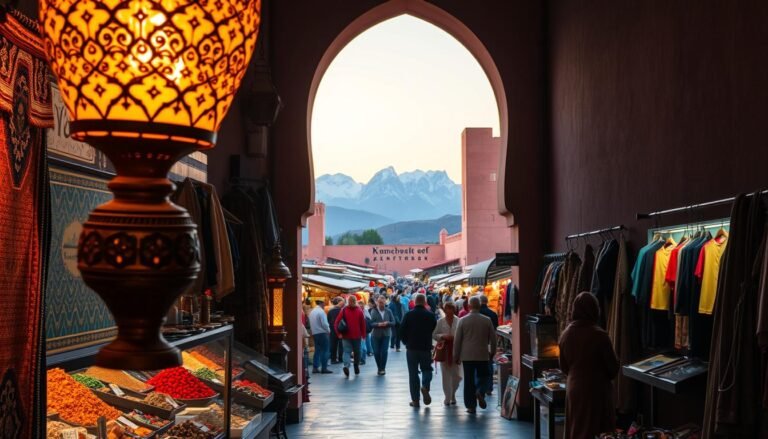
Marrakech packs vivid markets, quiet riads, and palace courtyards into a compact city you can explore in a few lively days. Start with a gentle morning at the Bahia Palace and Saadian Tombs to see detailed tilework, carved plaster, and painted ceilings before the heat builds.
Jemaa el-Fnaa at dusk comes alive just before nightfall. Time your visit slightly before dusk when food stalls warm up and performers start, so prices are steadier and crowds are lighter. Sample cooked-to-order stalls, confirm prices, and drink water between tastings.
Palaces and viewpoints: pair Bahia Palace’s painted ceilings with the marble and muqarnas of the Saadian Tombs for a full sweep of royal-era artistry. Climb near Koutoubia for skyline photos; the minaret is a handy marker when you navigate the souk streets.
- Souk strategy: take a short guided tour to learn key districts and trades—brass, leather, spices, and textiles—then let curiosity lead you down side streets.
- Don’t worry if you get lost; use offline maps as a backstop and note fountains, mosques, and gates as landmarks.
- Pick a riad near the medina edge for easier taxi access and a rooftop break between walks.
- If you plan a day trip to the Atlas Mountains or a desert excursion, book from Marrakech and keep the following morning light to recover.
Fes essentials: craft traditions, tanneries, and time travel
Fes feels like a living museum where narrow lanes hold centuries of craft and ritual. The old medina, Fes el Bali, contains thousands of alleys that can overwhelm at first but reward curiosity.
Official guides make your first morning far easier. A licensed guide points out Medersa el Attarine and Bou Inania and explains the style and architecture you’d miss on your own.
Official guides vs going solo in the world’s densest medina
If you have limited time, a short guided tour stitches key sites into a compact plan. Go solo later to wander, buy ceramics, and enjoy unexpected workshops.
Medersa el Attarine, Bou Inania, and dye-vat viewpoints
Visit the tanneries from a terrace and carry mint leaves to reduce the odor while you watch dye vats and craftsmen at work. Expect to get lost at least once; use those detours to spot hidden smiths and dye rooms.
- Start early for quieter lanes, then break mid-afternoon back at your riad.
- Plan a few hours for Borj Nord or a panoramic lookout to take in how vast the old city really is.
- When you leave, the train is the smoothest way to reach Marrakech or Rabat; buy tickets at the counter if machines fail.
Atlas Mountains your way: hikes, valleys, and Berber villages
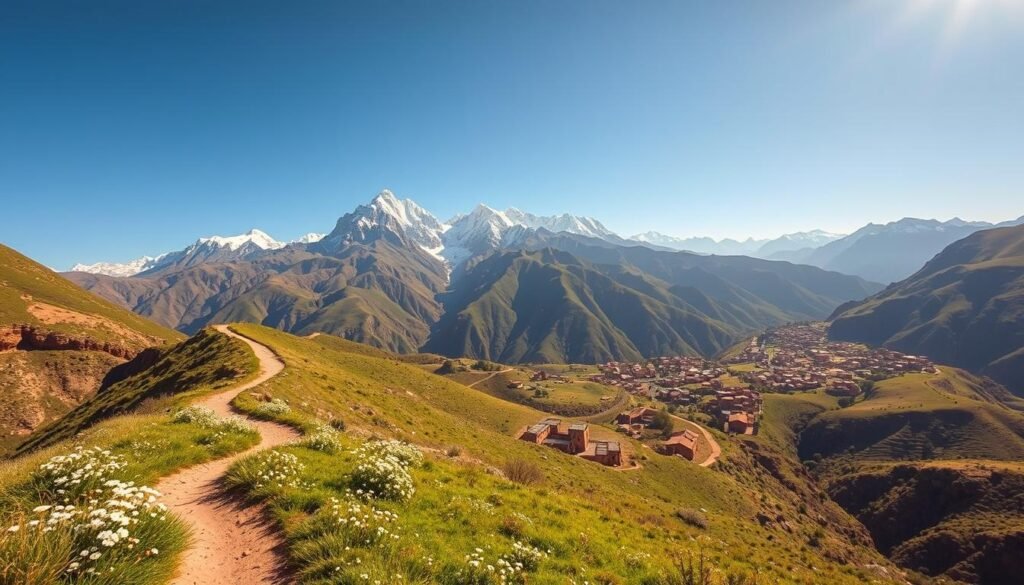
If you want a green break from city streets, the atlas mountains offer waterfall trails and slow village markets within easy reach.
Ourika Valley sits about an hour from Marrakech. Roads are paved and shared taxis from Bab Rob run often. Visit Tnine Ourika on Monday for a lively market, then take the short trail to Setti Fadma’s cascades.
Ourika waterfalls and Setti Fadma trails
Choose Ourika for easy access, riverside paths, and a compact network of trails. Start early to enjoy cooler air and clearer paths, then plan a long lunch before your return ride.
Ouirgane and Lalla Takerkoust: gentle routes and lake views
Ouirgane trades steep drops for rolling hills and olive groves. Lalla Takerkoust adds breezy lakeside walks and relaxed lunches. Private cars or small tours give you flexibility for trailheads and village detours.
- Practical tips: pack layers, trail shoes, water, and expect hearty tajines on terraces with mountain views.
- Build in a few stops along the way for photos, mint tea, or argan cooperatives.
| Spot | Distance from Marrakech | Highlights |
|---|---|---|
| Ourika | ~1 hour | Setti Fadma waterfalls, Tnine market |
| Ouirgane | ~1–1.5 hours | Rolling hills, olive groves, village walks |
| Lalla Takerkoust | ~45–60 minutes | Lake views, lakeside lunches, gentle trails |
Agafay Desert or Sahara Desert: choosing the right experience
Choosing the right desert experience helps you decide how much of your trip you want to spend on the road versus under open skies. Each option gives different landscape, drive time, and levels of remoteness.
Agafay — rocky, close, glamping and sunsets
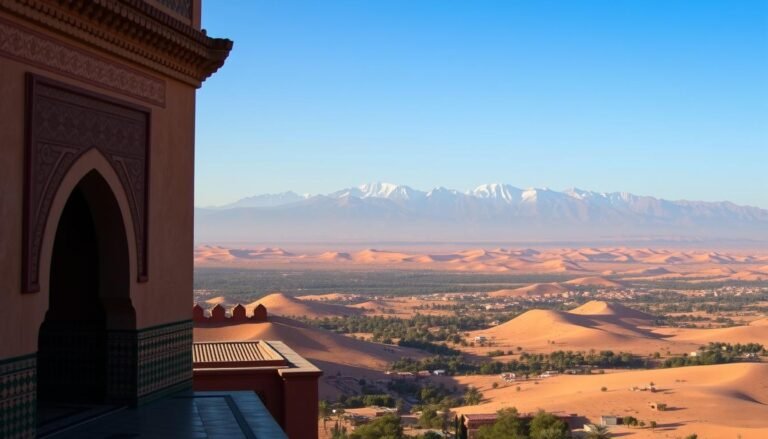
Agafay sits under an hour from Marrakech and offers rocky plains, luxe camps, and dramatic sunsets. It’s perfect if you want silence, stargazing, and a quick escape without long transfers.
Sahara — Erg Chebbi and Erg Chigaga: dunes, rides, and night skies
Erg Chebbi (Merzouga) gives classic dune riding, camel treks at sunset, and well-equipped camps with music around the fire.
Erg Chigaga is wilder and needs long 4×4 tracks via M’hamid. Expect a rawer feel and fewer facilities for true solitude.
Time, distance, and 4×4 realities
Big dunes require serious drive time. Plan 7–9 hours each way if you go via the Anti-Atlas and Ouarzazate. Some routes add mountain-pass stops and photo breaks that extend the day.
- Pick Agafay if you want desert light without two full travel days.
- Choose Erg Chebbi for iconic dunes, camel rides, and comfortable camps.
- Opt for Erg Chigaga when remoteness and 4×4 tracks are part of the appeal.
- Clarify what tours and camps include—meals, transfers, and luggage handling—before you book.
| Spot | Distance from Marrakech | Best for |
|---|---|---|
| Agafay | <1 hour by car | Glamping, sunsets, quick overnight |
| Erg Chebbi (Merzouga) | ~7–9 hours’ drive | Classic dunes, camel treks, lively camps |
| Erg Chigaga | ~8–10 hours with 4×4 tracks | Remote dunes, off-road adventure, minimal facilities |
Quick practical tip: if you’re short on time, choose Agafay; if you have extra days, the Sahara rewards the miles with unforgettable stars and silence.
Chefchaouen and the North: blue lanes, Tangier breezes, and Asilah art
Head north for a cooler, quieter contrast where blue-washed lanes and cliffside views meet sea breezes. Chefchaouen is usually reached via Tangier in about 2.5 hours by bus or private transfer. The old town streets are pedestrian-only, so arrange with your riad if you arrive late and need help with luggage.
Photo-friendly corners: wander painted stairways and blue-washed lanes, stopping often for images and small artisan courtyards. Hike up to the Spanish Mosque for sunset; arrive early, bring water, and claim a ledge for the best views.
Tangier is a crisp northern gateway. Walk the coast by Cape Spartel, where the Atlantic and Mediterranean meet, then visit the nearby Caves of Hercules. Pair those spots as a half-day option before or after your Chefchaouen stay.
- Some lanes are steep and stepped; ask your accommodation about luggage assistance or choose a riad near drivable edges.
- Expect to get lost in the nicest way; keep an offline map and enjoy quieter streets than busier medinas down south.
- Asilah makes a lovely northbound art stop—murals and seafront walks suit golden-hour photos.
- If short on time, a private transfer from Tangier is the fastest, most flexible option to reach Chefchaouen.
| Place | Distance from Tangier | Why go |
|---|---|---|
| Chefchaouen | ~2.5 hours | Blue lanes, photo spots, pedestrian streets |
| Cape Spartel & Caves | ~30–45 minutes from Tangier | Coast views, sea cave walk, short half-day trip |
| Asilah | ~1 hour | Seafront murals, relaxed galleries, beach strolls |
Coastal add-on: Essaouira ramparts, fresh catch, and beach walks
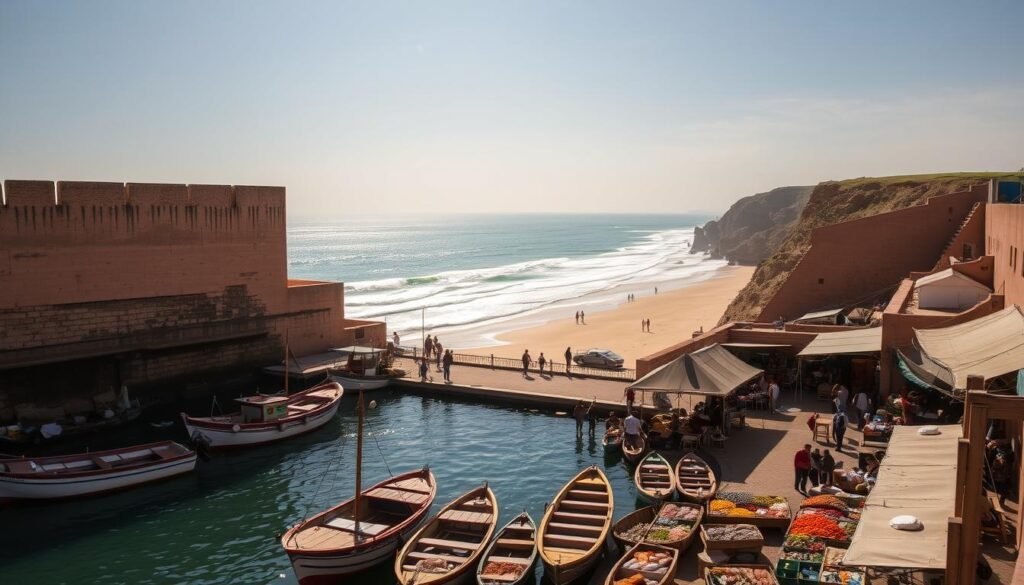
If you want a final night by the sea, Essaouira’s ramparts and harbor make an easy and restful stop. From Marrakech it’s about a three‑hour ride through argan groves where goats sometimes climb trees.
Walk the ramparts for Atlantic views, seabirds, and old cannons—an easy loop for photos any time of day. The harbour’s blue boats bring in the fresh catch; pick a stall and confirm price before they start cooking.
Wander lanes of white-and-blue architecture, pop into galleries and music shops, and stop at an argan cooperative en route for a quick look. Book a beach walk at golden hour when the light softens and the wind often eases.
- Quick ways to fit it in: count on a night here to slow your pace and sleep to the sound of waves before your flight home.
- If you’re pressed for time, a day trip still covers ramparts, port, and medina lanes.
- Want action? Consider surfing or kitesurfing lessons as an active coastal add-on before you head back inland.
Where to stay: riads vs hotels across cities, medinas, and desert camps
A well-located base makes sightseeing simpler and gives you a calm place to return each night.
Riad basics: inner courtyards, rooftops, and prime locations
Riads are traditional homes turned guesthouses, often with an intimate courtyard and a rooftop for breakfasts and views.
Choose riads for friendly hosts who can point the way through medina gates and arrange pickups.
In larger city centers, pick a riad near the medina edge for easier taxi access while staying within walking distance of main sights.
Desert stays: what’s included and what to expect at camp
Desert camps near Erg Chebbi or Agafay usually include dinner, breakfast, and camel or 4×4 transfers—always confirm before booking.
Ask about heating, hot water, and private bathrooms in tents. Temperatures swing widely between day and night, so plan layers.
- Expect varied room sizes and stairs; book early for the best suites and easier luggage access.
- Hotels give lifts, pools, and predictable services; riads trade that for character and location.
- Split stays work well: two nights in a riad, one hotel night with a pool, then a camp night under the stars.
- Read recent reviews for Wi‑Fi reliability if you need to upload photos each day.
| Type | Best for | Key feature |
|---|---|---|
| Riad | Character, medina access | Courtyard, rooftop breakfast |
| Hotel | Amenities, mobility | Lifts, pools, predictable services |
| Desert camp | Night under stars | Meals, transfers included (confirm) |
Budgeting your 10 days: transport, riads, tours, and meals
Start with a transport baseline and build your spending plan around the big ticket items first. Expect around £500 for a 10-day car rental with insurance in mid-low season. That gives you freedom for mountain passes and valley stops without rushed transfers.
Trains between major cities are affordable and fast; buy some seats in advance. CTM and Supratours buses are a budget-friendly option and Supratours stations are often closer to medinas.
Plan one guided tour — a city walk or food tour — to get context, then DIY the rest. Use street food and simple local restaurants to keep meal costs low, with one or two splurge dinners for special nights.
- Transport mix: train for city hops, bus for smaller stops, car for mountain segments.
- Extras: factor fuel, tolls, tips, entry fees, and a small contingency.
- Flexibility: pre-book popular tours in peak months and track spending daily to adjust mid-trip.
| Cost area | Typical UK budget (GBP) | Notes |
|---|---|---|
| Car rental (incl. insurance) | £500 | Best for remote valleys and flexible stops |
| Trains / buses | £80–£120 | Trains fast between cities; CTM/Supratours for value |
| Riads / hotels (per night) | £30–£120 | Breakfast inclusion affects value |
| Meals & extras | £150–£250 | Street food lowers cost; budget for two splurge dinners |
Connectivity, SIMs, and maps: staying online without getting lost
With a small data plan and a downloaded map, you’ll save time and stress while you explore. Buy a tourist SIM at arrival—airports sell Inwi, Orange, and Maroc Telecom packages.
Inwi, Orange, Maroc Telecom: coverage beyond cities
Inwi often performs best outside major urban areas, especially in desert and valley drives. Expect around 200 MAD for 20GB plus unlimited minutes as a practical option.
Offline maps for medinas and mountain valleys
Download offline maps for Marrakech and Fes before you enter narrow lanes; GPS drift is common in covered souks.
- Buy SIM on arrival: get data for navigation and photo sharing.
- Pin-drop key places: riads, city gates, and taxi stands so drivers can find you fast.
- Keep a dual‑SIM or eSIM: retain UK messaging while using local data.
- Cache routes and add waypoints in mountain areas for cafés and viewpoints.
- Back up passport photos and bookings to the cloud, then keep cached copies on device.
- Carry a power bank—long photo-heavy hours drain batteries quickly.
Pro tip: many riads have strong Wi‑Fi, but mobile data is the best way to get around when you’re out and about.
What to wear and pack: respectful outfits, layers, and desert-wise gear
Think in layers and purpose: sun protection by day, warm layers by night, and modest options for inner-city visits. Pack items that work across hot afternoons, cool mountain mornings, and dusty dune stretches.
Heat, elevation changes, and conservative settings
Dress modestly in conservative places; cover shoulders and knees when you enter medinas or rural sites. A light scarf makes quick adjustments easy and feels polite to the people you meet.
Desert essentials: scarves, ziplocks, headlamps, and warm layers
Packing the right way means practical choices that save time and fuss. Use ziplock bags for phones and cameras so sand cannot damage them.
- Aim for breathable layers to handle warm city afternoons and cooler mornings in higher elevations.
- Pack a sunhat, sunglasses, and high-SPF sunscreen for long medina days.
- For desert night comfort, add a fleece or down layer; temperatures drop fast after sunset.
- Choose walking shoes with good grip for tiled courtyards, cobbles, and dusty trails.
- Carry a headlamp for camp nights or dim lanes, and a reusable bottle with hydration tablets.
Final tip: one compact kit will help you visit morocco with ease and enjoy each city and rural experience without extra weight.
Safety, scams, and smart navigation in busy medinas
Good navigation and a few simple habits let you enjoy narrow lanes and lively markets with confidence. Expect helpful people, some persistent sellers, and the occasional unsolicited offer to show the way.
Recognizing “fake guides” and setting boundaries
Unsolicited helpers can be friendly or pushy. If someone insists on guiding you, say a firm no and move towards a main gate or your riad.
Tip: book an official guide through your accommodation or the tourism office for authorised tours.
Police checks, speed limits, and driving common sense
If you hire a car, drive attentively. Urban limits often sit between 20–60 km/h and police checks are common. Keep documents handy and remain calm if stopped.
Plan parking at paid lots near gates and walk the final stretch to avoid tight lanes.
Airport tips: luggage scans and keeping valuables secure
At the airport expect a final luggage scan on exit. Keep passports and electronics within sight and in zipped pockets.
- Keep small bills handy and secure valuables on busy streets.
- Share live location with your companion and set a clear meet-up landmark.
- Choose well-lit routes at night and agree taxi prices if meters aren’t used.
- Trust your instincts; if a situation feels off, step into a café and reorient.
Your Morocco 10-day adventure, wrapped up and ready to book
Use this brief wrap-up as your booking checklist for the full itinerary. It links Casablanca, Fes, the Middle Atlas, Erg Chebbi, Todra/Dades, Ait Benhaddou, Marrakech, an Atlas day, and a coastal finale—or swap the coast for Agafay.
Lock time-sensitive items first: Hassan II Mosque tickets, desert camp spots, and any guided day tours you value most. Trains cover big city jumps; CTM/Supratours and a short car hire handle gorges and off-map places.
Pick riads with rooftops for calm mornings, save map pins and gate names, and double-check airport transfer times for your final day. With smart pacing, you’ll fit medina craft, mountain air, and desert glow into one cohesive trip.