Your Ultimate 10 Days in Morocco Lonely Planet Itinerary
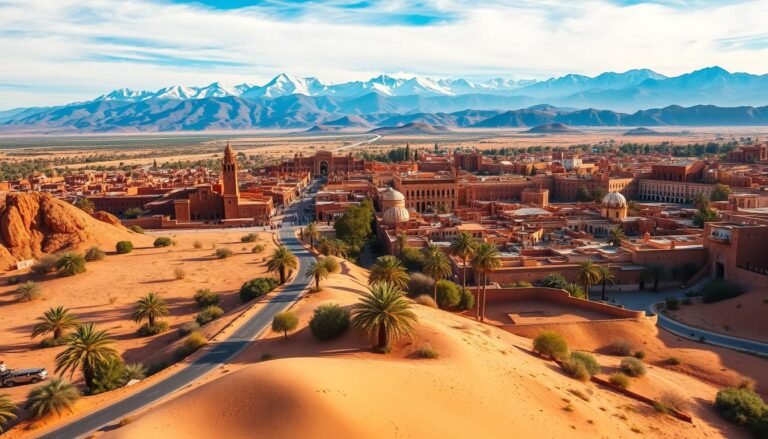
Surprising fact: you will cross coastal plains, Rif hills, imperial medinas and the Sahara all within one compact plan, covering vast landscapes that most visitors miss.
This morocco itinerary lays out clear travel legs so you waste less time and see more. You’ll move by ONCF train, CTM or Supratours coach, and one overnight coach to reach the dunes at the best hour.
You will get a day-by-day roadmap that balances lively city stops and slower seaside or desert moments. The itinerary places iconic moments—camel treks, rooftop dinners and medina strolls—when they shine most.
Practical perks: suggested departure times, ticket tips, and local tricks like using a scarf at tanneries. Follow this guide and your trip will feel energizing rather than rushed, giving you time to truly see morocco across varied landscapes.
Why this ultimate guide suits your trip style and timing
Travel smart: this itinerary cuts transit stress while still giving you enough time to soak up each place. Spring and autumn offer the best comfort for sightseeing, with warm days and mild nights across Fes, Marrakech and the coast.
The plan is paced to keep transfers efficient and windows for exploration generous. If you like momentum, the city-to-desert flow keeps energy high. If you prefer to slow down, the guide shows where to add a night or skip a stop.
You’ll travel by the clearest way for each leg—train, coach or private transfer—so people who hate logistics can focus on the experience. Notes flag windy routes and when a private car is worth the extra comfort.
| Travel style | When to add a night | When to skip a city |
|---|---|---|
| Fast-paced | Only if tired after long transfers | Skip smaller detours to save time |
| Balanced | Add an extra evening for medina nights | Skip Tangier for direct coastal route |
| Leisurely | Add nights at key hubs for relaxed travel | Omit rapid overnight coach sections |
10 days in Morocco Lonely Planet: what this itinerary covers at a glance
This compact overview pairs a single map with transfer times so you can see how each stop fits into your travel rhythm. The route keeps hotel changes low and sights high, giving you time to explore a city medina or rest between long coach legs.
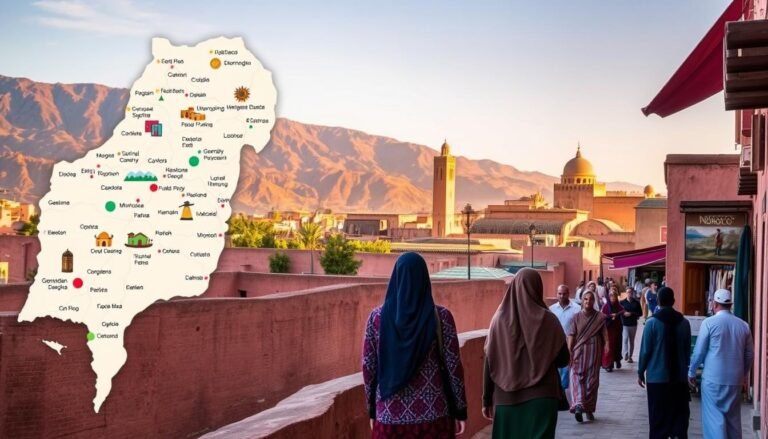
Route overview and Google Map snapshot
You’ll trace a clear route: Casablanca start, then Tangier, Chefchaouen, Fes, an overnight coach to Merzouga/Erg Chebbi, Marrakech, a short trip to Essaouira, and back to Marrakech or Casablanca for departure. The map shows where a day trip makes sense without rearranging nights.
Pace, travel times, and where you’ll spend the nights
The plan is paced to balance short hops and necessary long runs. Expect about 2h10 for Casa–Tangier, 2.5h to Chefchaouen, 4–5h to Fes, a 10h overnight coach to the Sahara region, a long 12h coach to Marrakech, and roughly 3h to Essaouira.
- Nights: Tangier (1), Chefchaouen (1), Fes (2), Sahara region (1), Marrakech (2), Essaouira (1).
- Highlights on route: blue maze of Chefchaouen, Fes medina depth, and Marrakech icons like jemaa el-fnaa, bahia palace, and saadian tombs.
- Use the map to pick short stops along way for food or photos so you keep travel time useful and enjoyable.
| Leg | Typical hours | Recommended stop |
|---|---|---|
| Casablanca → Tangier | ~2h10 by train | Quick Hassan II Mosque visit if time allows |
| Tangier → Chefchaouen | ~2.5h by coach | Wander the blue alleys of the town |
| Chefchaouen → Fes | ~4–5h by bus | Evening medina stroll and rooftop dinner |
| Fes → Merzouga (overnight coach) | ~10h overnight | Arrive for a full desert day and camp night |
| Merzouga → Marrakech | ~12h by coach | Plan breaks; carry snacks and water |
Arrive in Casablanca and connect to Tangier
Start your trip in Casablanca with a short, well-timed stop so you can see the city’s top site before you head north. The Hassan II Mosque is the city’s signature landmark and has the world’s tallest minaret—book timed tours online to avoid wasting time.
Best travel way to Tangier: head to Casa-Voyageurs and take the ONCF train up the coast. Expect roughly 2 hours 10 minutes on the rail; it often beats a coach or a flight once you factor airport check-in and transfers.
Quick stop at Hassan II Mosque before you go
If your plane arrives early, use a short stop to stretch legs and photograph the mosque. Tours run at set times, so keep padding between your visit and the station departure.
ONCF train vs coach vs flight — practical comparison
- Train: fastest city-to-city way for this leg, comfortable and cost-effective for day travel.
- Coach: cheaper sometimes, but slower and less predictable for tight times.
- Flight: adds airport transit; only worth it if a cheap direct option fits your schedule.
Pro tip: use luggage storage if you have a few hours in Casablanca. On arrival in Tangier, taxis or pre-booked transfers beat the Aerobus for reliable city access. Choose seats near luggage racks on the train and keep travel documents handy for a smooth connection.
Tangier essentials: medina, Hercules Caves, and Cape Spartel
A soft landing works best here. Start your Tangier stop at the Grand Socco (Place du Grand Socco), the busy square that opens onto the medina. From there, wander the old streets upward toward the kasbah for wide sea views and easy photo spots.
Evening on the Corniche and sunset viewpoints
Make time for Cape Spartel and the Hercules Caves, where the sea and light create memorable shots. The cave’s Africa-shaped opening is one of those quick, iconic stops you’ll want on your morocco itinerary.
The Corniche is your evening place to breathe. Locals gather here for mint tea and sunset air. A short walk along the promenade gives you lighthouse views and a calm, coastal rhythm.
- First day plan: Grand Socco → kasbah → Corniche walk at sunset.
- Loop option: taxi to Cape Spartel, visit Hercules Caves, return for dinner.
- Tip: pack a light layer for breezy headlands and keep your camera ready for lighthouse and cave silhouettes.
| Site | Why visit | Best time |
|---|---|---|
| Grand Socco (square) | Entrance to the medina; people-watching and cafes | Morning or late afternoon |
| Kasbah viewpoint | Panoramic sea views and photo spots | Golden hour before sunset |
| Cape Spartel & Hercules Caves | Meeting point of seas; iconic cave opening | Daytime visit, pair with late-afternoon return |
| Corniche | Seaside promenade and local evening life | Sunset and early evening |
Chefchaouen day: blue-washed lanes and Spanish Mosque sunset
Arrive to a town where painted walls and narrow lanes slow your pace and brighten every corner. Plan to reach Chefchaouen by late morning after the roughly 2.5-hour bus from Tangier.
Start at Plaza Uta el-Hammam and wander toward the kasbah for a quick garden and museum peek. Many buses drop outside the old town, so expect a short taxi or a 30-minute walk into the heart of the lanes.
- Tip: roll light—most streets are pedestrian-only.
- Let the small maze welcome you; getting lost here is part of the charm.
- A rooftop breakfast at your riad makes for a perfect morning before exploring.
- Save energy for the Spanish Mosque hike and plan 30 minutes for the uphill walk to enjoy sunset views.
| Leg | Typical time | Note |
|---|---|---|
| Tangier → Chefchaouen | ~2.5 hours | Some drop-offs outside old town |
| Bus stop → Kasbah | Taxi or 30 min walk | Pedestrian lanes; light luggage advised |
| Kasbah → Spanish Mosque | ~30 min uphill | Best at sunset for panoramas |
This day on the itinerary is restorative—shop artisan stalls, take shady café breaks, and enjoy a calm contrast with the bigger city pace.
Fes for two days: tanneries, madrasas, and panoramic Borj Nord
Allow two days for Fes so you can balance guided highlights and quiet rediscovery off the main routes. Fes el-Bali is a UNESCO-listed medina with over 9,000 alleys and no cars — it is the largest pedestrian-only medina in the world.
Start your main medina day with a booked tour to cover Al-Qarawiyyin (view from the doors), Bou Inania Madrasa, and local craft ateliers. A guide saves you time and helps you find authentic workshops without pressure to buy.
Guided medina walk: Al-Qarawiyyin, Bou Inania, and craft ateliers
Plan a few hours for the guided walk so you can pace the route, learn the stories, and stop at potters, weavers, and apothecaries. Bou Inania’s cedar wood and zellij tilework reward close inspection.
Royal Palace gates and the Jewish Quarter (Mellah)
Don’t miss the Royal Palace golden gates for an easy photo stop. Then head to the Mellah to see the contrast of architecture and quieter streets. Finish the day by climbing to Borj Nord for sunset views over the maze below.
- Book a tour for your busiest medina day.
- Time tannery visits for good light and use mint to offset strong smells.
- Use day two to revisit favorite lanes, try a local hammam, or shop with intent.
| What to do | Why it matters | Suggested time |
|---|---|---|
| Guided medina walk | Efficiently covers major sites and hidden ateliers | 3–4 hours |
| Chouara Tannery terrace | Classic rooftop view over dye vats; mint helps with smell | Late morning to early afternoon |
| Borj Nord viewpoint | Panorama of the city and medina layout | Golden hour before sunset |
| Mellah and Royal Palace gates | Architectural contrast and strong photo moments | Afternoon |
Overnight to the Sahara Desert: Merzouga and Erg Chebbi
Leave Fes late and arrive at dawn to make the most of a full desert day. The overnight coach departs around 20:30 and takes roughly 10 hours, arriving near 06:15 so you have all morning to explore Erg Chebbi.
Plan your time so you book a sunset camel trek and then settle into a Berber-style camp for a night beneath brilliant stars. Camps usually serve dinner, offer a fire-side music session, and provide simple bunks or private tents.
Camel trek, desert camp under the stars, and sandboarding
Ride a camel over dunes at sunset, or climb one before first light for a sunrise view you’ll remember. Add sandboarding for a quick adrenaline hit or a 4×4 tour to reach far-off dune faces.
Khamlia Gnawa music and flamingos at Dayet Srij (seasonal)
Stop at Khamlia village to hear Gnawa rhythms — a soulful cultural experience that complements the desert scenes. If you travel in winter or early spring, look for flamingos at Dayet Srij, a shallow seasonal lake nearby.
- Tips: pack layers: desert nights cool fast. Keep a scarf, sunglasses, water, and a small daypack.
- Consider booking a combined tour to save time and include transfers, camp, and local stops in one price.
| Activity | Typical time | Why it matters |
|---|---|---|
| Overnight coach (Fes → Merzouga) | ~10 hours (20:30 → 06:15) | Arrive at dawn with a full day to explore dunes |
| Sunset camel trek & camp night | Evening to next morning | Classic desert experience with music and stars |
| Sandboarding / 4×4 ride | 1–3 hours | Adds thrill and covers more dune terrain |
| Khamlia village visit | ~1 hour | Live Gnawa music and authentic local culture |
Crossing to Marrakech: long ride tips and smarter stops along the way
The transfer from the dunes toward Marrakech is long but packed with classic sights if you choose stops.
Expect about 12 hours on the standard coach route from Merzouga to Marrakech. Bring water, snacks, a small pillow and layers — the bus can turn cool and desert mornings are chilly.
Sit near the front if you’re motion-sensitive and charge devices before you leave. Download maps or podcasts because signal disappears for stretches and you’ll want entertainment for the long hours.
If you can upgrade to a private car or 4×4, split the run over one or two days to visit Todra Gorge, the Dades curves, Skoura palms, Ouarzazate and Aït Benhaddou. Aït Benhaddou makes a great proper stop for a walk and lunch.
Even on coach services you get short breaks — use them to stretch, eat slowly and reset rather than rush. Check road conditions if you hire a car and let a local driver plan the waypoints.
| Option | Typical hours | Best for |
|---|---|---|
| Direct coach | ~12 hours | Budget-conscious travellers with limited time |
| Private car (1–2 day) | Varies by stops | Scenic stops, more comfort, flexible pace |
| Shared transfer + short stops | ~12–14 hours | Balanced budget with a few key stops |
Keep your itinerary flexible on arrival; avoid packing activities the same day you finish this long leg. If your available days morocco are tight, the direct coach saves both time and money for the rest of your trip.
Marrakech highlights: medina energy, Jemaa el-Fnaa and souks
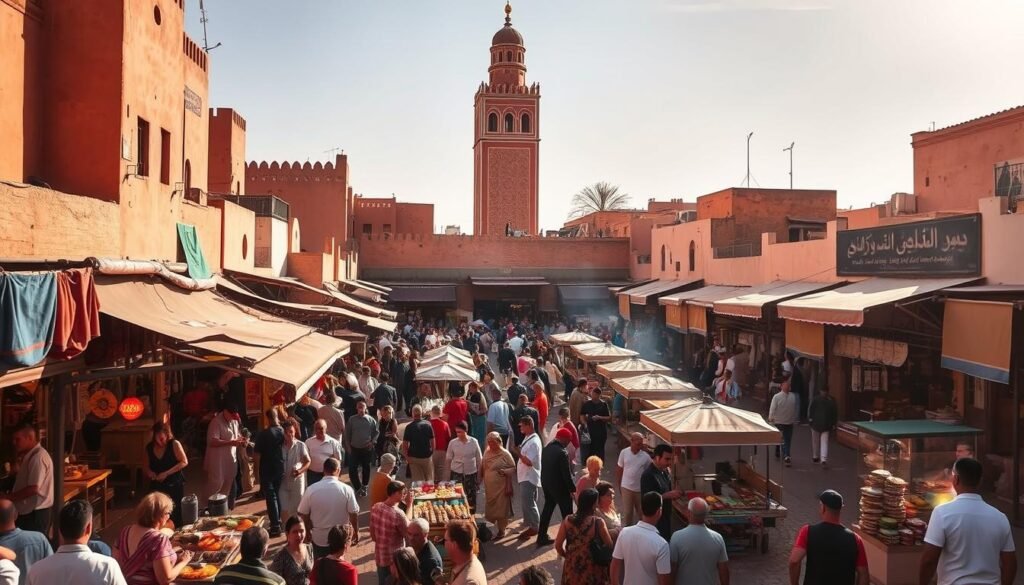
The old medina is a compact hive of shops, alleys and small squares where the city rhythm changes from calm morning to a lively evening.
Start your first day with a relaxed walk through lanes, aim toward jemaa el-fnaa as the square comes alive, and watch vendors change from daytime sellers to food stalls.
Evening food stalls and rooftop dinners with a view
Snack at the street stalls for local food or book a rooftop dinner to see the square glow while musicians and storytellers set up.
- Wander the souks by craft: leather, brass and textiles are grouped, so you can focus on one trade at a time.
- If your time is short, prioritise palaces and main monuments over far-flung gardens for better value on a packed itinerary.
- Consider a short orientation tour on arrival to learn reliable routes and trusted sellers early.
Start the next morning with breakfast on a terrace, then return to the lanes while they are cool and quiet. If a short desert trip from the town appeals, ask about Agafay options while you’re still connected and planning.
| Evening option | Why choose it | Best for |
|---|---|---|
| Food stalls | Local flavours, fast and cheap | People-watching and variety |
| Rooftop dinner | Comfort, views over the square | Photography and a relaxed meal |
| Guided souk walk | Learn craft locations and bargaining tips | New visitors who want confidence |
Keep small notes for snacks and tips, stay friendly while bargaining, and build in a riad patio breather so your senses can reset between souk forays. This approach helps you enjoy the people and the place without rushing.
Palaces and monuments: Bahia Palace, Saadian Tombs, and beyond
Marrakech’s palaces pack a lot into a small area, so plan a clear loop to see the highlights without backtracking.
Start early at the Bahia Palace to enjoy painted ceilings and tiled courtyards before lines build. The 19th-century rooms reward slow walking and close photos.
Bahia vs Badi: what to prioritise for your limited hours
If your time is tight, pick Bahia for ornate detail and colourful interiors. Badi Palace offers wide ruined courtyards and rooftop storks, which is better if you prefer scale and photography of open spaces.
Ben Youssef Madrasa and Koutoubia photo angles
Slot Ben Youssef into the same morning for striking tilework and courtyard geometry that photograph well. For Koutoubia, scout nearby gardens and side streets to frame the minaret without the crowds.
- Walk Bahia → Saadian Tombs for minimal backtracking.
- Consider a focused half-day tour to add historical context and save time.
- Keep water, pace yourself, and check light so you catch the best photo moments before the city heats up.
| Site | Why visit | Best time |
|---|---|---|
| Bahia Palace | Ornate 19th-century rooms and painted ceilings | Early morning |
| Saadian Tombs | 16th-century marble and carved plaster details | Mid-morning |
| Badi Palace | Vast ruins, rooftop views and storks | Afternoon for light |
| Ben Youssef Madrasa | Restored courtyards and tile geometry | Late morning |
Finish with a quick look back toward Jemaa el-Fnaa as evening approaches. If you want the full route for planning your next day, see this full itinerary.
Day trip ideas along the way: Aït Benhaddou, Atlas Valleys, and Agafay
Several rewarding excursions sit just off the main route and fit neatly into a single day. These options let you add variety without reshuffling your whole itinerary.
Aït Benhaddou is a UNESCO ksar reached via Ouarzazate. Visit the stacked earthen village, walk the narrow lanes and enjoy terrace views for strong photos and culture-rich time.
The Atlas Valleys — Ourika or Ouirgane — give you mountain air, waterfalls and local lunches. They are ideal if you want village life without heavy travel.
When to choose Agafay over the far desert
Agafay sits under an hour from Marrakech and offers desert-style camps and activities without the long Sahara drive. It’s perfect if your itinerary is tight, you’re with family, or you prefer a short transfer by car.
- Many tours include hotel pick-up; private cars give flexibility for photos and breaks.
- Start early to avoid crowds in valley trails and village lanes.
- Pack layers: mountain and desert temperatures swing across a single day.
| Option | Why choose it | Best for |
|---|---|---|
| Aït Benhaddou | Historic ksar, photography | Culture & history |
| Atlas Valleys | Waterfalls, village meals | Fresh air & hikes |
| Agafay | Quick desert feel, camps | Tight schedules & families |
Essaouira finale: ocean breezes, ramparts, and relaxed medina vibes
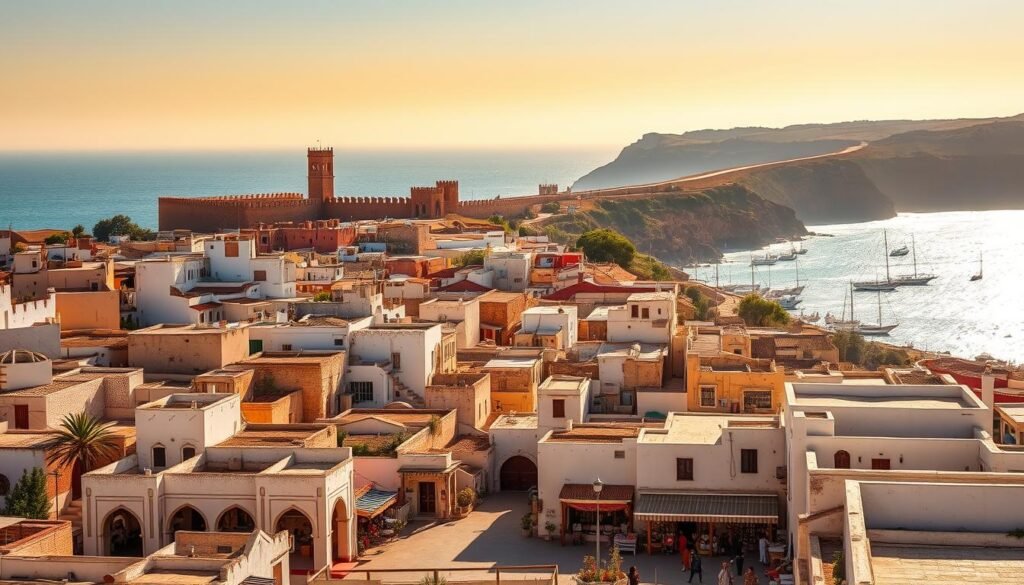
Finish your route with a coastal pause where wind-swept walls and mellow lanes set a gentler pace. From Marrakech the drive takes about three hours through argan groves, often dotted with goats perched in branches — a classic sight on your travel route.
The town’s Portuguese ramparts face the Atlantic and invite a slow walk. Start with a seaside breakfast or coffee on a terrace before exploring the harbour.
Harbor walk, fresh seafood, and beach time
Walk the harbour to watch blue boats unload. Pick a grill stall for ultra-fresh food at fair prices. The medina is compact and calmer than larger cities, so shopping feels relaxed rather than rushed.
- Stroll the wide beach in the afternoon and catch a clear sunset over the Atlantic.
- Pack a windbreaker; the breeze can be brisk even on sunny days.
- For photos, find quieter rampart corners where walls meet sea spray.
- Keep an eye on transport times for your return; buses and transfers run frequently.
Wrap the evening with a simple tagine, a slow stroll through the main square, and live music as local people gather. It’s an ideal final day to unwind before onward travel.
Traveling Morocco without a car: trains, coaches, and shared transfers
You can travel the main route comfortably without hiring a car by using Morocco’s rail and coach network.
ONCF trains link Casablanca, Rabat and Tangier with set classes and reliable schedules. Take ONCF for coastal legs — it’s the fastest way for Casablanca → Tangier (~2h10) and offers different classes so you can compare prices and comfort.
Booking ONCF and CTM/Supratours like a pro
CTM and Supratours handle inland routes: Tangier→Chefchaouen (~2.5 hours), Fes→Merzouga (~10 hours overnight) and Merzouga→Marrakech (~12 hours). Coaches are air-conditioned, have luggage holds, and sell out on busy times, so book ahead online for peak travel periods.
Overnight coaches save a day by moving you while you sleep—bring an eye mask, layers and an alarm for early arrivals. Arrive early at depots to tag luggage and take a good seat. Keep essentials in a small day bag for quick access.
- Use ONCF for coastal legs and CTM/Supratours for inland runs if you want to avoid a car.
- Compare ONCF classes for value; first class is often worth it on long day segments.
- Shared transfers and private cars are handy when coach times don’t match your plan or roads are winding.
| Mode | Best for | Typical hours |
|---|---|---|
| ONCF train | Coastal fast links | ~2h10 (Casa–Tangier) |
| CTM / Supratours coach | Inland routes and overnight runs | ~2.5–12 hours |
| Shared transfer / private car | Flexible stops and comfort | Varies by route |
Always confirm station names (eg. Casa-Voyageurs) and keep e-tickets and ID handy for checks. If you join a tour leg, align pickups with your itinerary so transfers save time and stress rather than adding hassle.
When to go: best time to visit Morocco for this route
Aim for shoulder seasons to enjoy milder temperatures and fewer queues on your morocco itinerary.
Spring (March–May) brings warm days, blooming gardens and comfortable nights—ideal for city walks, medina exploring and a pleasant desert evening. You’ll find better light for photos and fewer people at major sites.
Autumn (September–November) mirrors spring’s benefits: cooler daytime highs, bearable desert nights and a calmer feel across the country. It’s a smart choice if you want steady weather and easier travel between stops.
Summer can push the desert above 45°C (113°F), making treks and dune walks tough. If you must travel then, plan activities for early morning and late afternoon, and choose accommodations with strong ventilation or AC.
Winter gives crisp city days but very cold desert nights—pack layers. Festivals or public holidays may shift opening hours, so keep a flexible morning or afternoon slot in your plan. For more timing details, check this best time to visit guide.
- Tip: Essaouira stays breezy; bring a light jacket for evenings.
- Tip: Book desert nights and hot-weather lodging ahead if you travel outside shoulder seasons.
Where to stay: riads that fit your budget and route
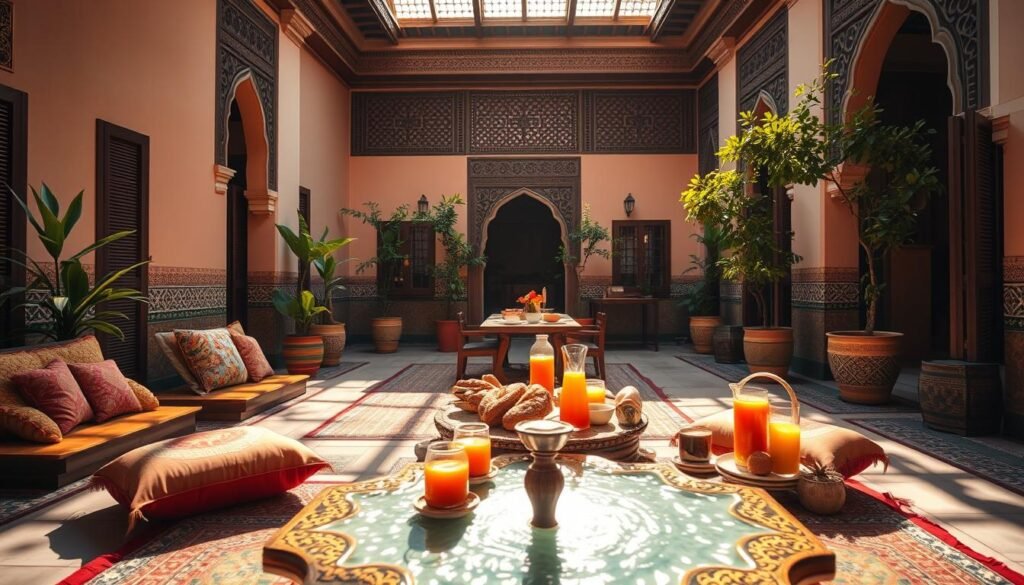
Pick a riad that feels like a quiet home base after busy sightseeing days. A riad is a traditional Moroccan house built around a courtyard. Many offer shaded patios, rooftop breakfasts, and warm, personalised hospitality that make your stay special.
What a riad is and how to pick the right one
Location matters. In Chefchaouen and Fes, medina riads often need a short walk from the taxi drop. Ask the host to meet you at the main square to guide those last turns.
In Marrakech, choose a riad close to Jemaa el-Fnaa but tucked down a side alley for quieter nights. Check Wi‑Fi if you plan to work or need steady access; signal can vary inside thick walls.
- Match nights to amenities: if you have hot weather, a pool courtyard is a welcome bonus.
- Compare prices: a few streets off the busiest lanes often give better value and sleep.
- Luggage and access: confirm how far the taxi drop is and whether staff will help with bags.
- Book early: spring and autumn fill fast—reserve the best courtyards and terraces ahead of time.
- Special night: consider a desert camp upgrade on your route for one standout evening beyond riad stays.
| City | Riad tip | Why it helps you |
|---|---|---|
| Fes | Choose a medina riad with host meet-up | Eases navigation and reduces stress on arrival |
| Chefchaouen | Pick central riad near Plaza Uta el-Hammam | Cuts walking with luggage and keeps you close to blue lanes |
| Marrakech | Riad near but not on Jemaa el-Fnaa | Central access with quieter nights and rooftop breakfasts |
| General | Check Wi‑Fi and pool availability | Suits remote work, cooling off, and longer stays |
Tours versus independent travel: saving time and money
Deciding between a guided tour and going solo shapes how much you see and how much you plan. A bundled option that links Fes, Merzouga and Marrakech can remove a lot of hassle for you. It groups transport, a camel trek, a camp night and key stops so the transfer becomes part of the experience rather than a long slog.
Popular Fes-Merzouga-Marrakech 3-day desert tour pros and cons
Pros: the tour saves you planning time and often matches or beats DIY prices once you add tickets, transfers and a quality camp stay. Good operators add scenic pauses at Aït Benhaddou and valley viewpoints so you get highlights the smart way. Tours also manage logistics in the sahara desert, ensuring you’re at dunes for sunset and sunrise.
Cons: independent travel gives you more control over departure times, where you linger and how you budget. Group size affects flexibility, so if privacy matters, search for small-group or private options. Always check recent reviews for vehicle comfort, guide quality and camp standards before you book.
- Quick decision guide: choose a tour if you value saved time and organised stops.
- Go independent if you want tailored pacing and lower day-to-day commitment to a fixed route.
| Aspect | Tour (3-day) | Independent travel |
|---|---|---|
| Planning time | Low — operator handles logistics | High — you book coaches, tickets and camp |
| Cost comparison | Often competitive once all extras are included | Variable; can be cheaper but adds effort |
| Flexibility | Moderate; set itinerary with some stops | High; pick times and villages you visit |
| Comfort & pacing | Paced for sightseeing and rest | Depends on coach schedules and connections |
Your trip wrap-up: next steps to book and make the most of your days
Start by pinning dates to major legs: book ONCF and CTM/Supratours tickets for popular times, and reserve the overnight desert coach early so you know the exact arrival time. Lock timed entries like the Hassan II Mosque and confirm riad pickups to save bursts of wasted time.
Then secure any camp night and check what pickup, dinner and wake times are included. Pack a scarf for tanneries and dunes, bring layers for cool desert evenings, and keep cash for small purchases. Respect country rules — don’t bring a drone without permission or customs may take it.
Final practical checklist: add buffers before long transfers, organise e‑tickets with offline backups, and consider a short guided leg if you are tight on time. Do this and you’ll see morocco from medina mornings to world-class dunes, with great food, welcoming people and the best moments saved for last on your itinerary and trip morocco.